Pondside diet notes.
A wild Mallard’s diet is roughly 70% plant matter, 30% animal matter, varying sharply by season. Spring is heavy on invertebrates (laying females need protein); summer favours seeds and pondweed; autumn is grain (especially in farmland); winter is whatever’s available. The “Mallards eat anything” reputation is true but oversimplified - they have preferences and follow them when food is abundant.
The seven food categories
A Mallard’s annual diet, by approximate volume:
- Aquatic plants (duckweed, pondweed, smartweed, wild rice) - 30-40%.
- Seeds and grains (wild rice, agricultural corn, oats, wheat) - 25-35%.
- Aquatic invertebrates (midge larvae, freshwater shrimp, snails) - 15-20%.
- Acorns in autumn - up to 15% in some regions.
- Terrestrial plants (grasses, clover, sprouting grain) - 5-10%.
- Insects (terrestrial - flies, beetles) - small percentage.
- Small amphibians and fish fry - trace, occasional.
The picture is of an omnivore strongly biased toward plant matter, with seasonal protein peaks.
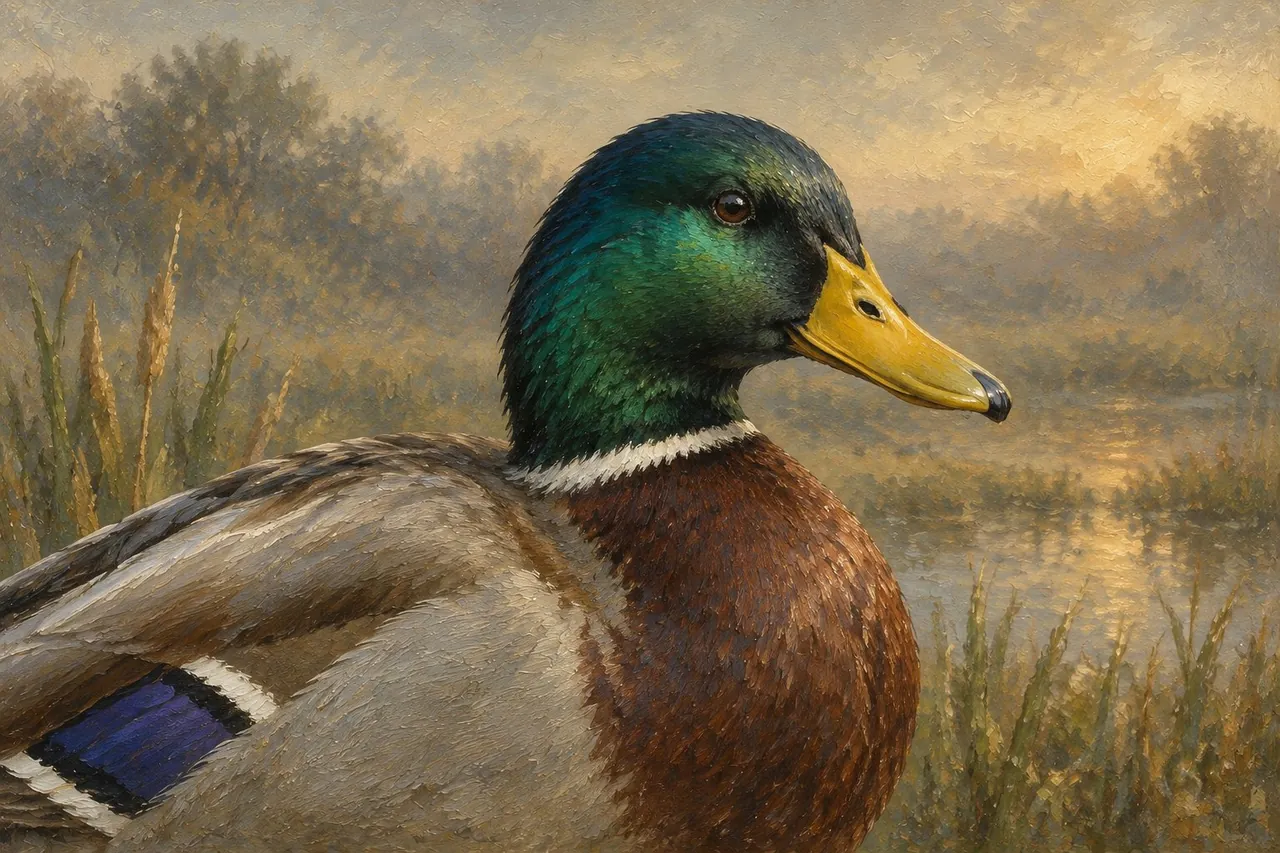
Seasonal shifts
- Spring (March-May): hens preparing to lay shift heavily to invertebrates. Midge larvae, snails, mosquito larvae make up most of the diet. Drakes maintain a similar diet.
- Summer (June-August): post-laying, mostly plant matter. Adults moult and stay near food; ducklings eat invertebrates exclusively for first weeks then transition.
- Autumn (September-November): maximum calorie intake for migration. Grain fields and acorn-heavy oak woods are prime feeding habitat. Mallards regularly fly several kilometres to a corn stubble field at sunset.
- Winter (December-February): whatever’s still available. Open water with surviving pondweed, agricultural waste grain, supplemental feeding.
How they feed
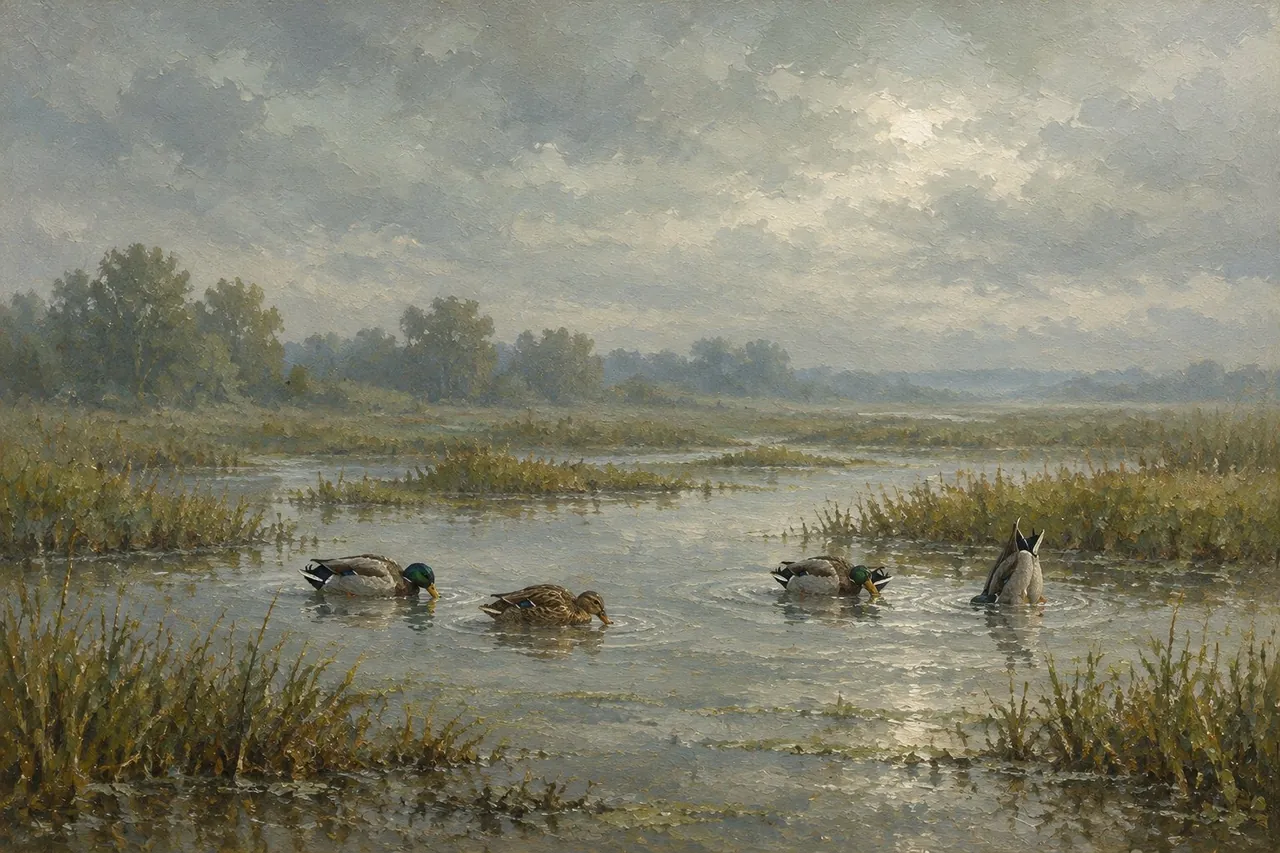
Mallards are dabblers - they feed at the surface or by tipping bottom-up in shallow water:
- Surface feeding - picking floating duckweed, scooping seeds.
- Tipping (bottom-up) - reaching plants and invertebrates 30-50cm below.
- Grazing on land - especially on acorns and waste grain.
- Filter-feeding with lamellae - the comb-like edges of the bill filter small food items from water and mud.
They don’t dive. Diving ducks (Canvasback, Scaup) compete for similar food but reach deeper levels.
Ducklings
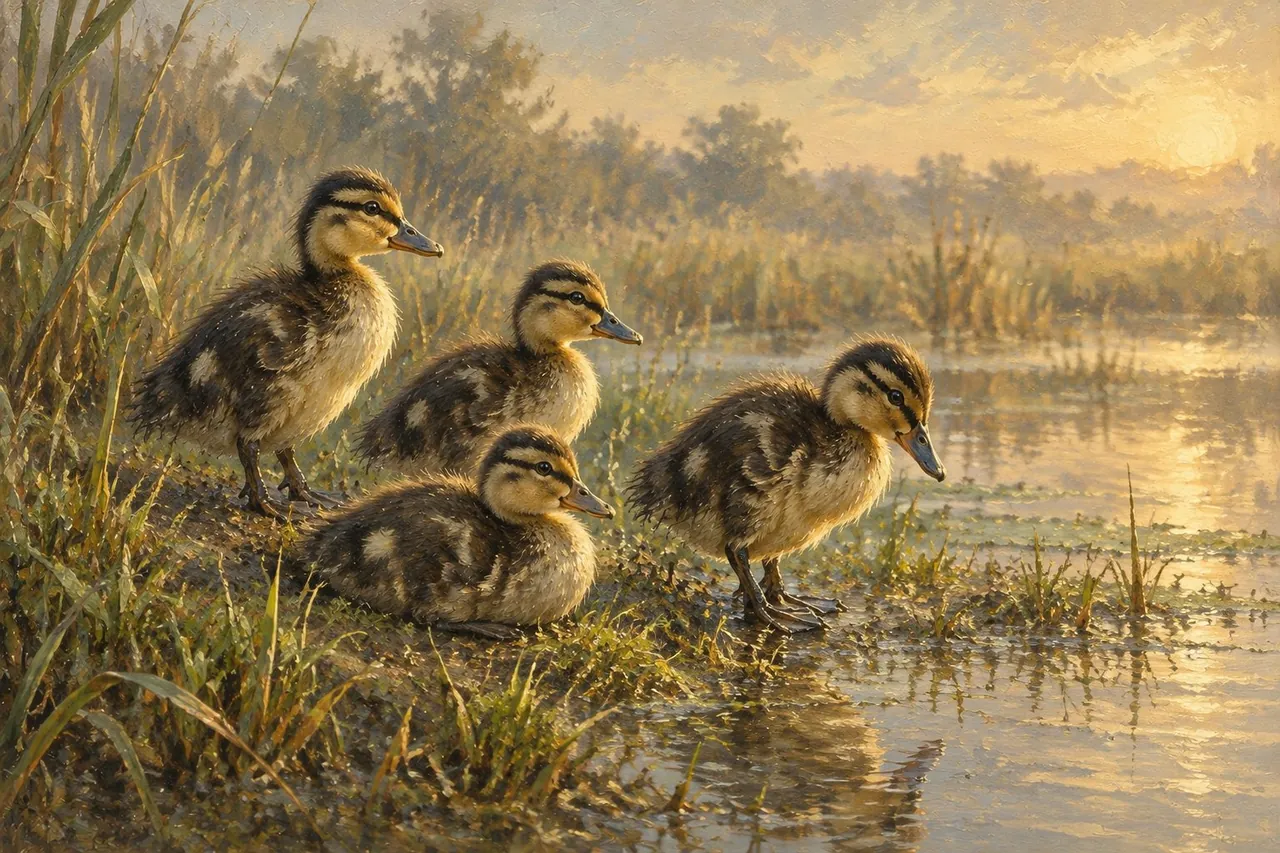
Mallard ducklings eat invertebrates almost exclusively for the first 2-3 weeks. They need the protein for rapid feather growth. By 3-4 weeks they begin taking plant matter. By 6-8 weeks they’re eating the same adult diet.
This protein dependency is why duckling broods stay close to invertebrate-rich shallow water margins, not in the centre of larger ponds.
What to feed in supplemental feeding
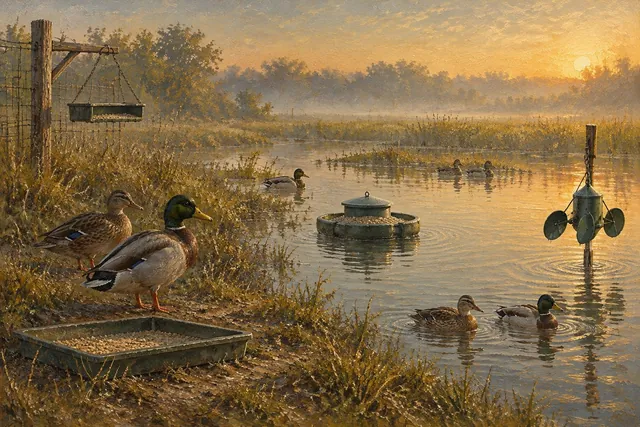
If you’re feeding Mallards at a pond:
- Cracked corn - the universal safe answer.
- Frozen peas (thawed) - high protein.
- Oats - dry porridge oats.
- Mealworms - protein hit, especially good in spring.
- NO bread, NO crackers, NO salted food.
Cracked Corn 50 lb Bag
The universal mallard supplement.
Cracked yellow corn matches what wild mallards seek in autumn farmland - small grain pieces they can easily swallow. A 50 lb bag at farm-supply price goes vastly further than supermarket bread.
- 50 lb bag, single ingredient: corn
- Mimics autumn farmland diet
- Safe for ducks, geese, wild turkeys, deer
 CountryMax · 50 lb

As an Amazon Associate we earn from qualifying purchases.
The bottom line
Mallards are seasonal opportunists with a strong plant bias. Spring is invertebrate-heavy; autumn is grain. Ducklings need invertebrates for protein. Supplemental feeding works with cracked corn; never with bread.
For more, see wild duck feeding and planting a duck-friendly pond.