
Found 3 pellets under a roost oak. All vole skulls, no insects.
An owl’s digestion is built for swallowing prey whole. The bird ingests an entire mouse or vole in seconds. Bones, fur, teeth, and claws can’t be digested, so the owl separates the soft tissue in two specialised stomach chambers and compresses the indigestible parts into an oval pellet, which it coughs back up 6-10 hours later. Pellets under a roost tree are the most reliable way to identify what species of owl is hunting an area, and what it’s eating.
The two-stomach system
Like all birds, owls have a stomach in two parts:
- Proventriculus (glandular stomach) - secretes acid and enzymes that begin breaking down soft tissue.
- Gizzard (muscular stomach) - a strong muscular sac that grinds and compresses indigestible material. In owls, the gizzard is the pellet-forming chamber.
Owls have much weaker stomach acid than hawks and falcons. That’s why owls can’t dissolve bone the way hawks do, and so produce pellets full of skeleton. Hawk pellets, by contrast, are mostly fur with very few bones.
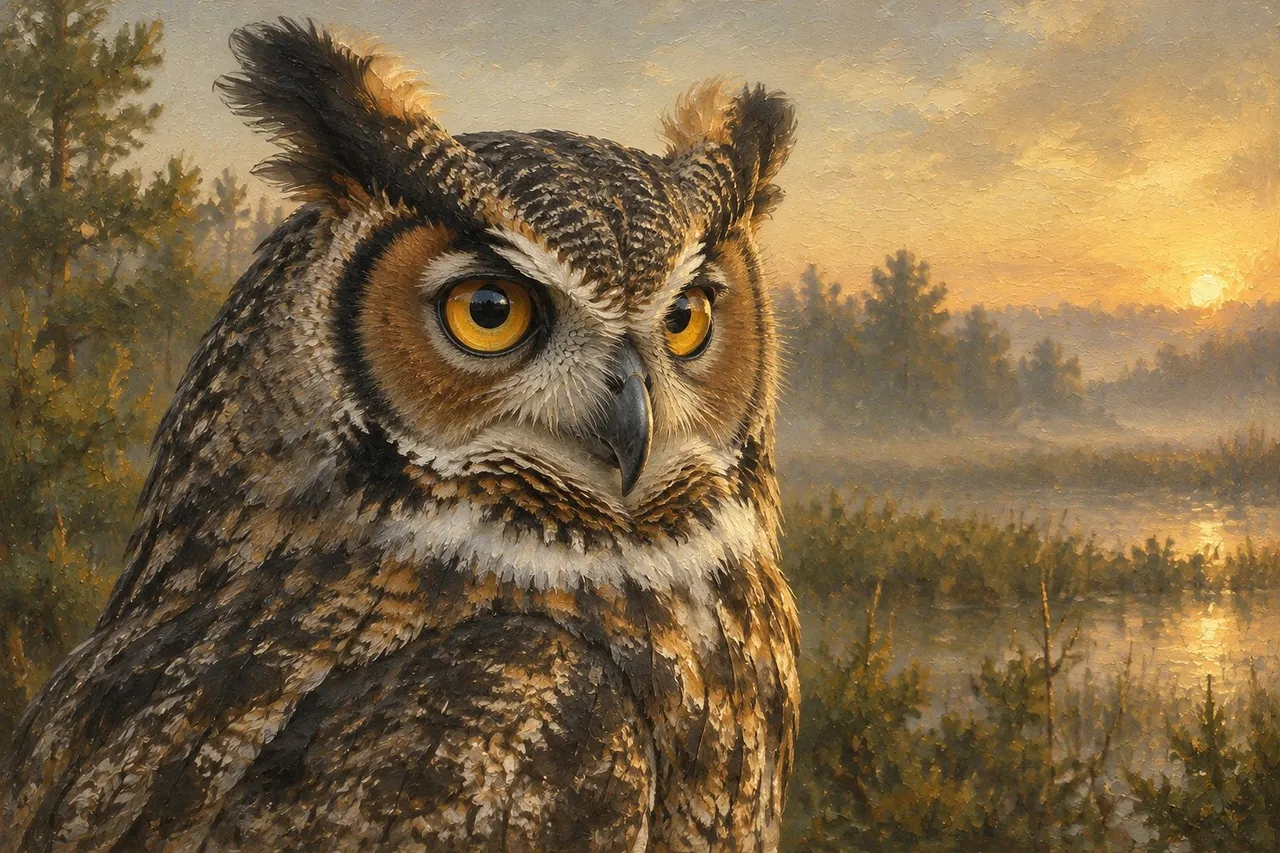
Pellet formation timeline
- 0 hour - owl swallows prey whole.
- 0-1 hour - prey enters the proventriculus; acid and enzymes begin work.
- 1-6 hours - soft tissue is digested and absorbed in the small intestine.
- 6-10 hours - the gizzard compresses the indigestible parts (bones, fur, feathers, teeth, claws) into a wet oval mass.
- 10-12 hours - the pellet is regurgitated, usually shortly before the owl hunts again.
An adult owl produces one or two pellets per day, depending on prey volume.
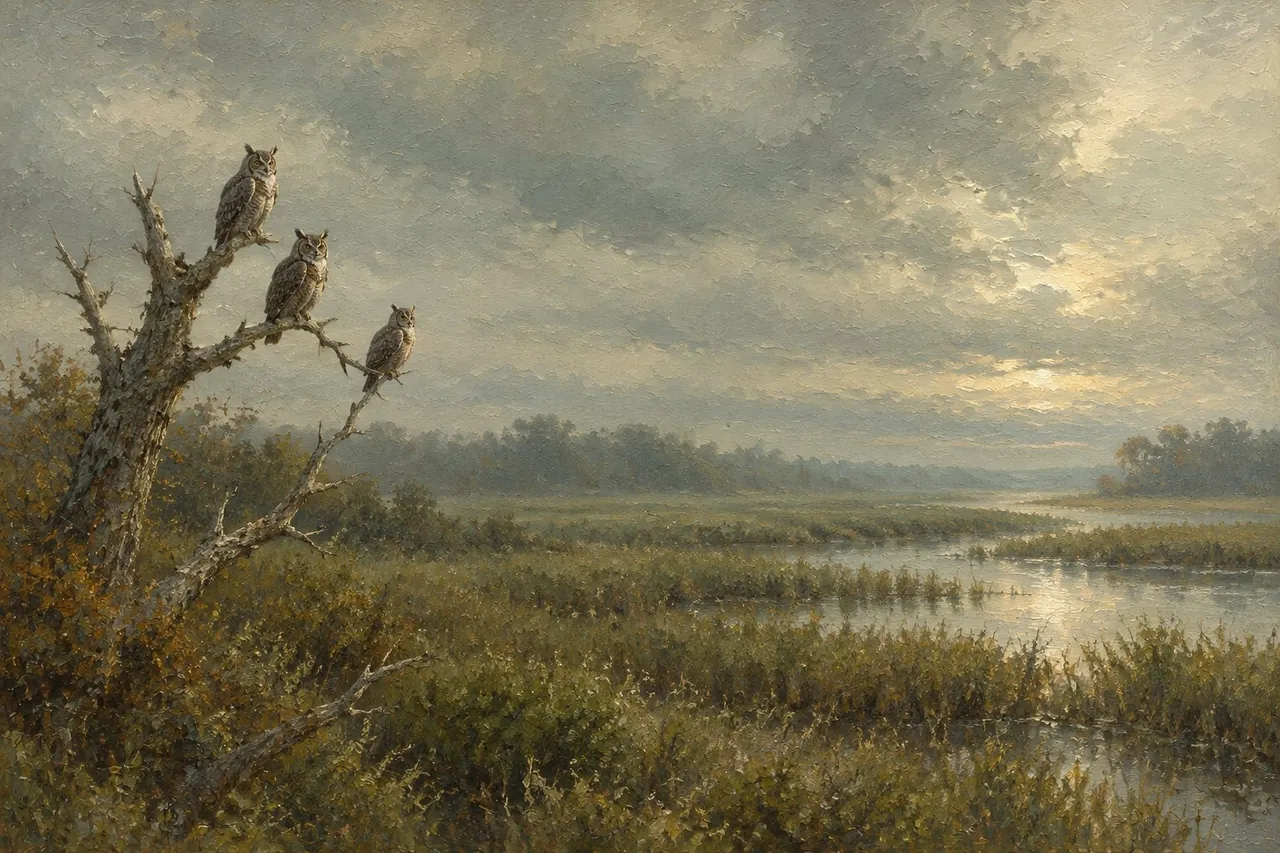
You find fur and bones in an owl pellet. What does that tell you?
Source: Cornell Lab: owl pellets ↗
What pellets tell you
A pellet is a complete record of what the owl ate. Dissecting one under a magnifying glass reveals:
- Skulls - intact in most owl pellets. Vole, mouse, shrew, and bird skulls can be identified to species.
- Jaw bones and teeth - the most reliable identifier of small mammals.
- Long bones - femurs, humeri, often intact.
- Fur and feather - matted around the bones.
- Insect parts - beetle elytra in small owl pellets (Screech, Saw-whet).
A Great Horned Owl pellet typically holds the skeleton of one large rodent or rabbit. A Barn Owl pellet often holds 3-4 vole skeletons. A Saw-whet Owl pellet may hold mouse bones plus insect remains.
Where to find pellets
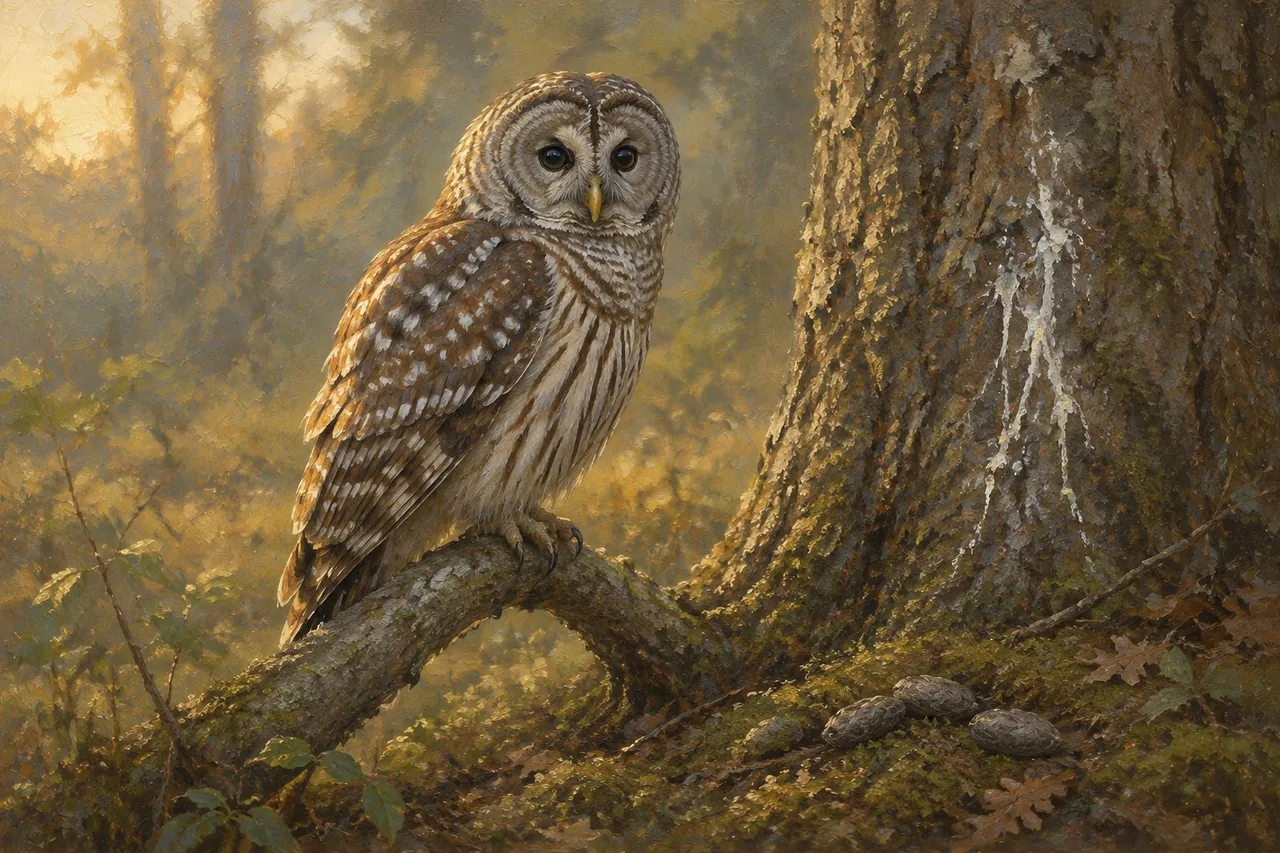
Beneath a regular roost tree. Owls return to the same perches night after night, so accumulated pellets pile up at the base. Look for:
- Whitewash splash on the trunk or bark.
- Oval grey-brown lumps 2-7cm long depending on species, on the ground or in the moss.
- Crushed lower branches and litter that has been repeatedly visited.
Pellets are dry, odourless, and safe to handle, though best soaked in water before dissection.
National Audubon Society Birds of North America
Match the pellet to the bird.
Identifying the owl from its pellet means knowing roost preferences, range, and prey patterns by species. The Audubon master volume has plates and habitat detail for every North American owl, which makes pellet-to-species ID much faster than a single regional guide.
- 800+ species, full North America
- Detailed habitat, range, and prey notes
- Hardback format for desk reference
 Audubon · 2021 Ed.

As an Amazon Associate we earn from qualifying purchases.

The bottom line
Owls swallow prey whole, digest the soft tissue in a two-chamber stomach, and cough up the rest as a pellet 6-10 hours later. One or two pellets per day per bird. Pellets are the most reliable evidence of which owls hunt an area and what they’re eating.
For more, see types of owls and owl talons.