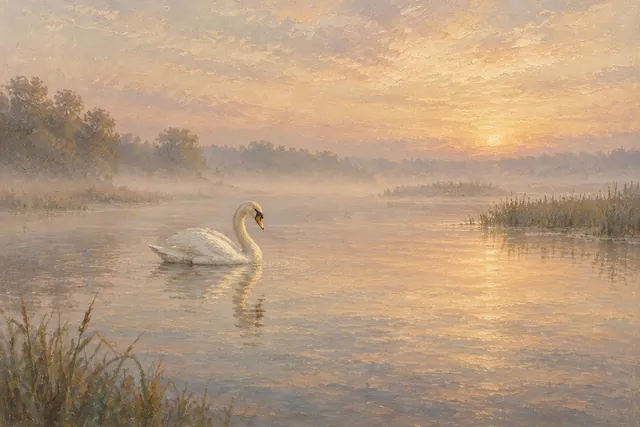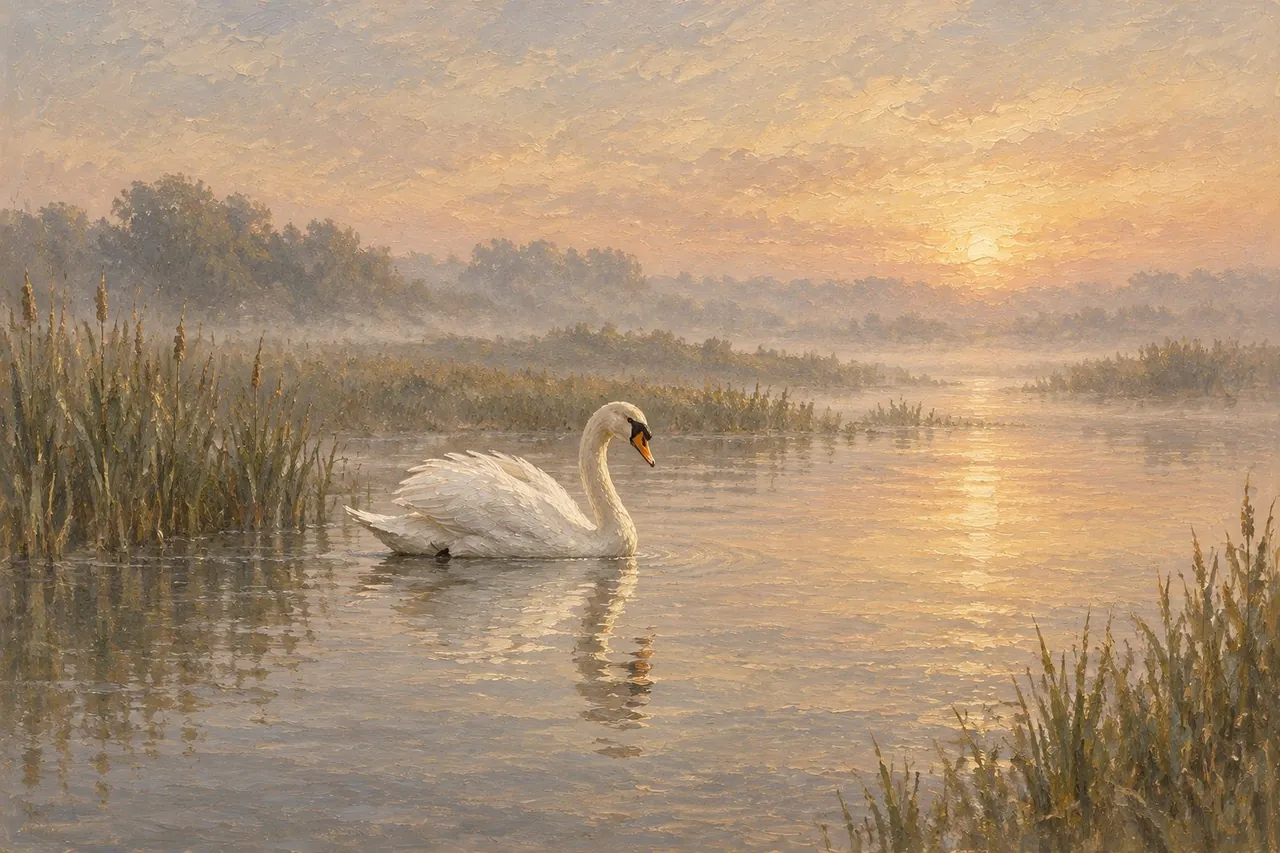
Marshside acoustic notes.
Swans don’t quack - their syrinx (avian voice box) is shaped differently from a duck’s. They make a range of other sounds: a snorting hum (Mute Swan), a loud bugling trumpet (Trumpeter Swan), a whooping yelp (Whooper Swan), and a high warbling whistle (Tundra Swan). The “Mute Swan” is the quietest, but still produces hissing, grunting, and a recognisable wingbeat thrum in flight.
The five swan species and their voices
- Mute Swan (Cygnus olor) - the quietest. Hisses, grunts, snorts, and a low rumbling honk. The wingbeat in flight produces a distinctive thrumming sound audible 200+ metres away.
- Trumpeter Swan (Cygnus buccinator) - the loudest. Deep bugling trumpet call audible over a kilometre. The name fits.
- Whooper Swan (Cygnus cygnus) - high yelping whoop, repeated in flight. Common over Eurasian wetlands.
- Tundra Swan (Cygnus columbianus) - high warbling whistle, more delicate than Whooper. Migrant in North America.
- Black Swan (Cygnus atratus) - musical bugling, less powerful than Trumpeter. Native Australia.
- Black-necked Swan (Cygnus melancoryphus) - whistling call. South America.
Why swans don't quack
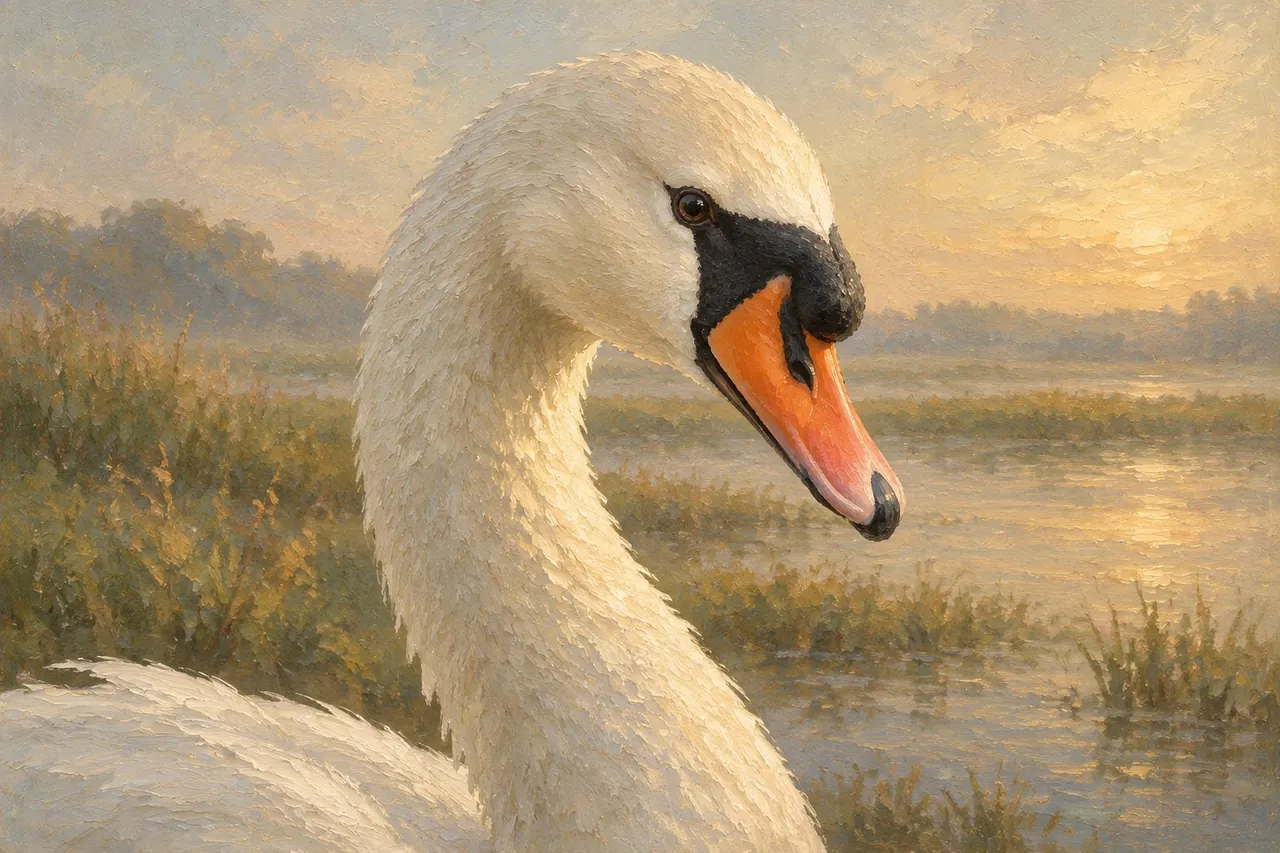
Quacking is a duck thing. The duck syrinx produces a high-pitched flat sound; the swan syrinx produces a deeper, more resonant tone. Anatomically, swans have a longer trachea (extending into the breastbone in some species), which acts like the bell of a trumpet to amplify low-frequency calls.
The “trombone” of a Trumpeter Swan’s trachea is one of the most extreme vocal adaptations in any bird - a 50-cm coil inside the sternum that gives the call its bugling depth.
The Mute Swan misconception
The “Mute” name is a misnomer. Mute Swans are quieter than other swan species but they’re not silent. They produce:
- Hisses - the warning vocalisation. Loud and obvious.
- Snorts - between paired birds or at intruders.
- Grunts and rumbles - during feeding, between pair and cygnets.
- A trumpet-like honk - rare but documented, especially during aggressive displays.
- The wingbeat thrum - audible from far away in flight.
Anyone who has been close to a hissing Mute Swan knows it’s not mute.
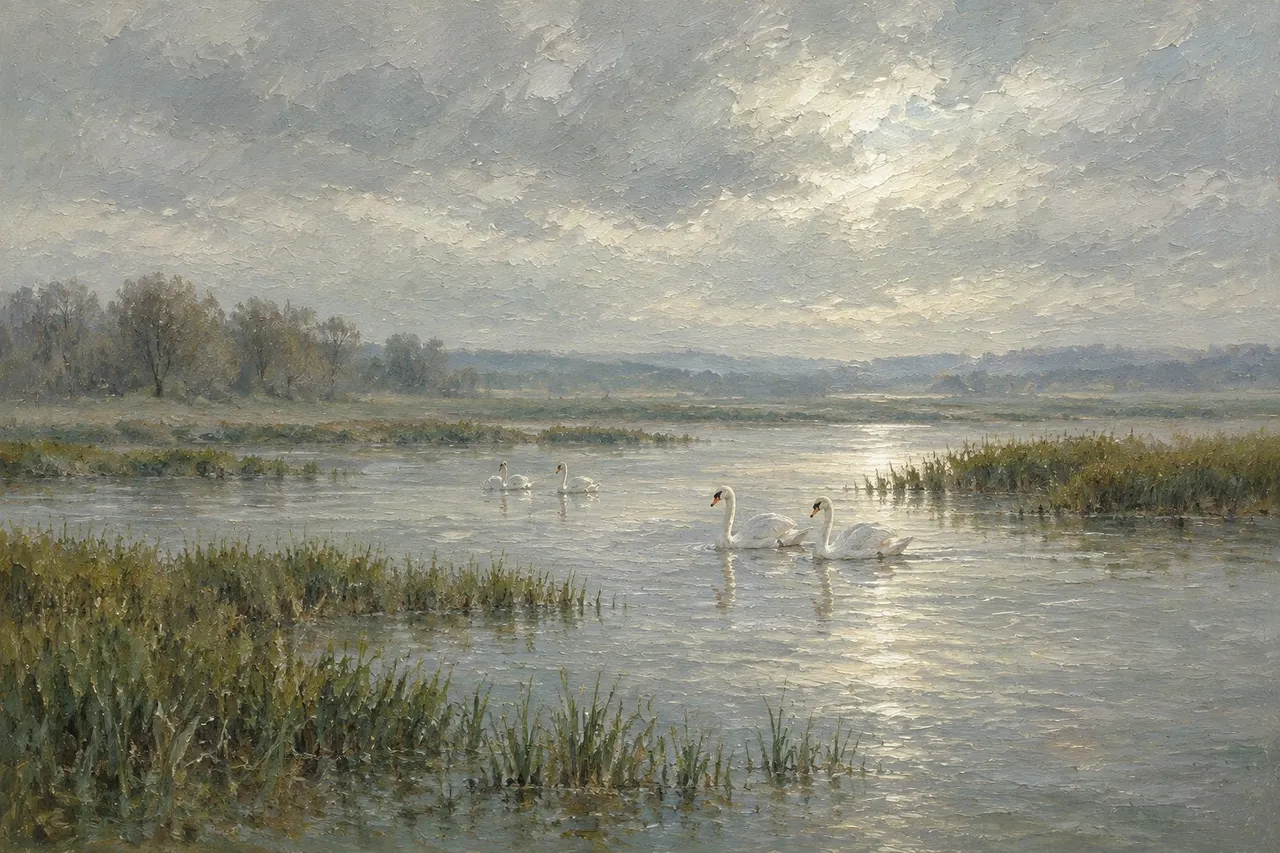
A swan hisses. What can you conclude?
Choose the strongest interpretation.
What the calls mean
The basic vocabulary, across species:
- Hiss - warning, escalating to attack.
- Trumpet/bugling - flight call, family coordination, territorial display.
- Whistle/whoop - flight communication, especially in flocks.
- Soft murmur/grunt - contact between paired adults and between adults and cygnets.
- Loud honk - alarm or excitement.
The flight sound
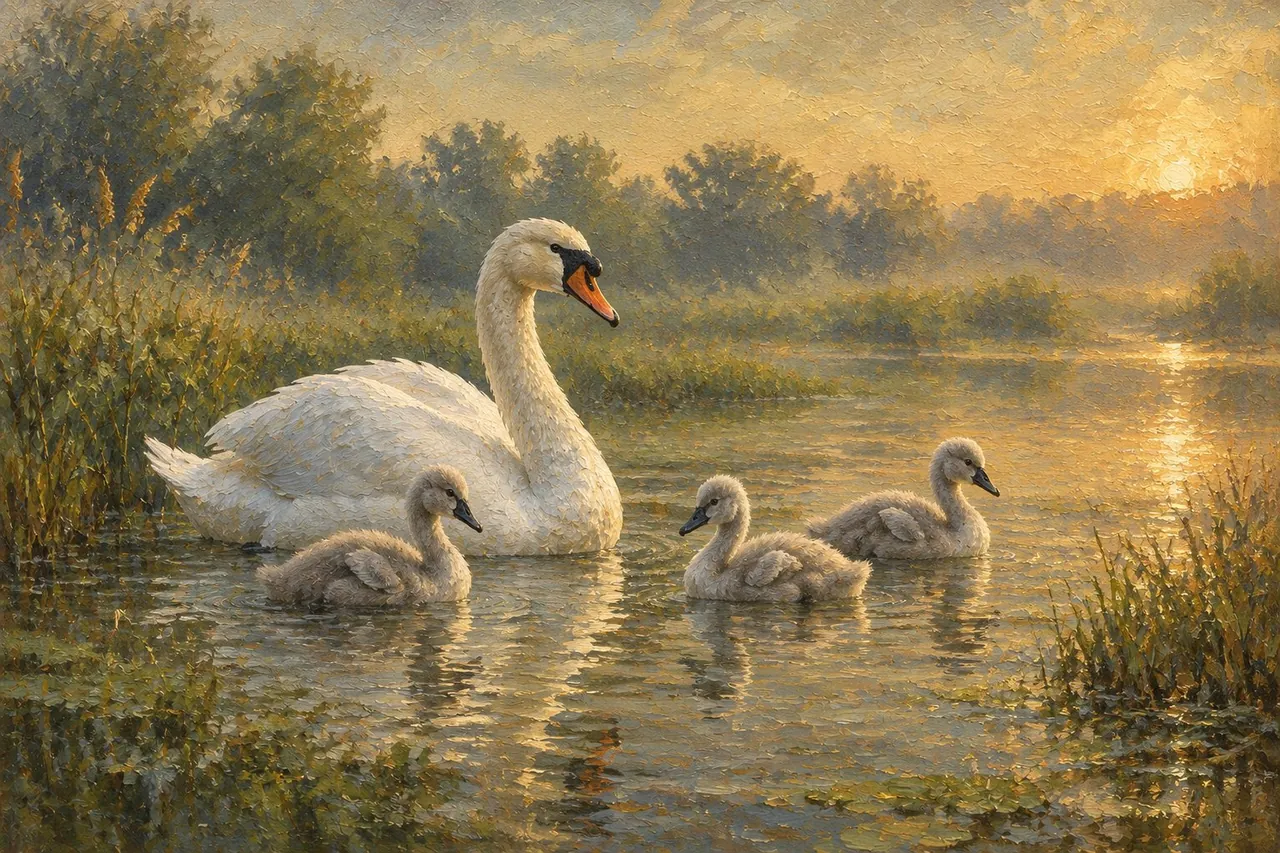
Worth a separate mention: the Mute Swan’s flight produces a distinctive low-frequency thrumming that comes from the wingbeats themselves, not the voice. The sound carries hundreds of metres and is one of the most evocative sounds in a wetland at dawn.
The Whooper and Trumpeter combine flight thrum WITH constant calling in the air, which is why their migrating flocks are audible long before they’re visible.
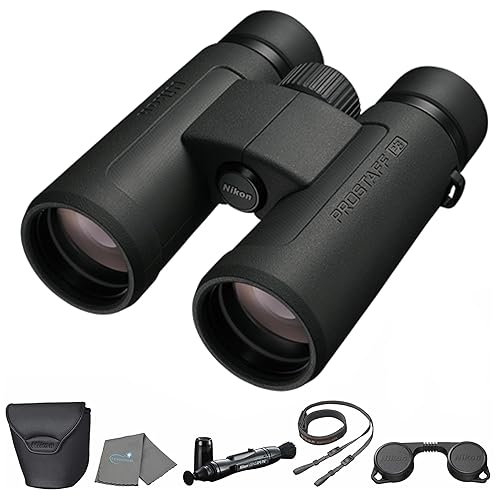
Nikon Prostaff P3 8x42 Binoculars
For matching call to bird.
Identifying a Whooper from a Tundra Swan by call alone is hard. Pair the call with visual confirmation at distance using 8x optics and the ID becomes simple. Waterproof, fogproof, the standard birding binocular.
- 8x42 - the canonical birding magnification
- Waterproof and fogproof
- Light enough to use one-handed
 Nikon · Prostaff P3

As an Amazon Associate we earn from qualifying purchases.
The bottom line
No, swans don’t quack. They hiss, bugle, whistle, hum, and trumpet, depending on species. The “mute” swan is the quietest but not silent. The Trumpeter Swan’s call carries over a kilometre and is one of the most extraordinary sounds in the bird world.
For more swan behaviour, see swan predators and swan takeoff.