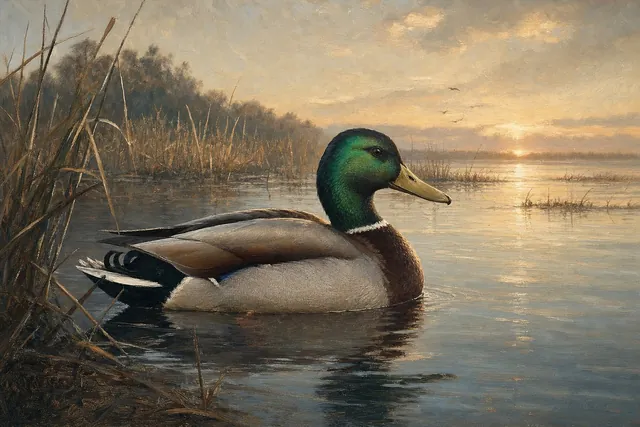
Anatomical notes.
A duck is built around water. Every external feature - the wide flat bill, the webbed feet at the rear of the body, the dense waterproof feathers, the oil gland near the tail - serves either swimming, diving, or filter-feeding. Internally the same: a long gut for processing tough plant matter, a gizzard for grinding grit-laden food, a serrated tongue for filter-feeding.
External anatomy
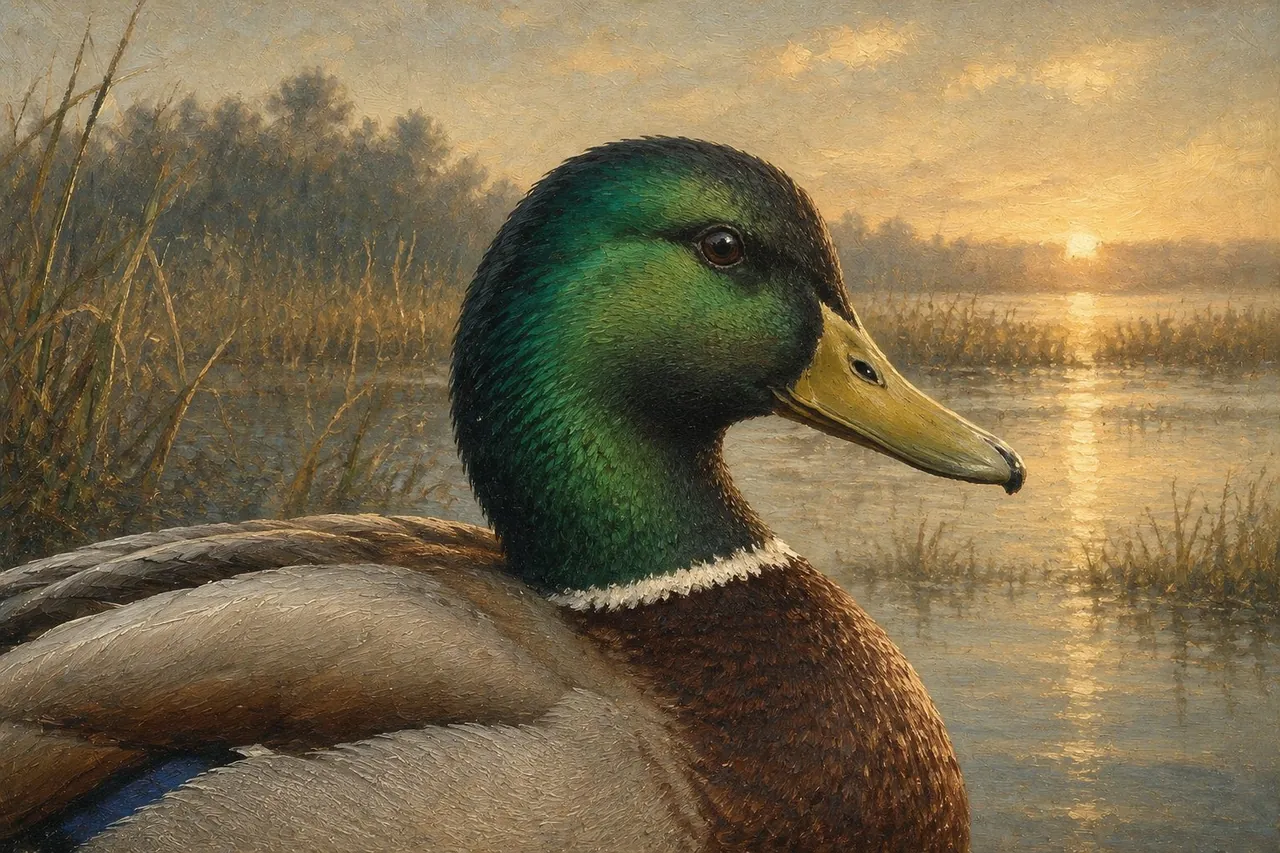
The bill:
- Lamellae - comb-like ridges along the inside edge for filter-feeding small food from water.
- Nail - the hardened tip used for picking up larger items.
- Nostrils - placed forward so the duck can breathe while filter-feeding.
- Bean - the rounded knob at the bill tip (less prominent than in geese).
The head:
- Eyes placed laterally for near-360° vision (watching for predators).
- Ear coverts - feathered openings behind the eye; ducks hear well.
- Iridescent speculum patch - on the wing, often visible in the head’s reflection during preening.
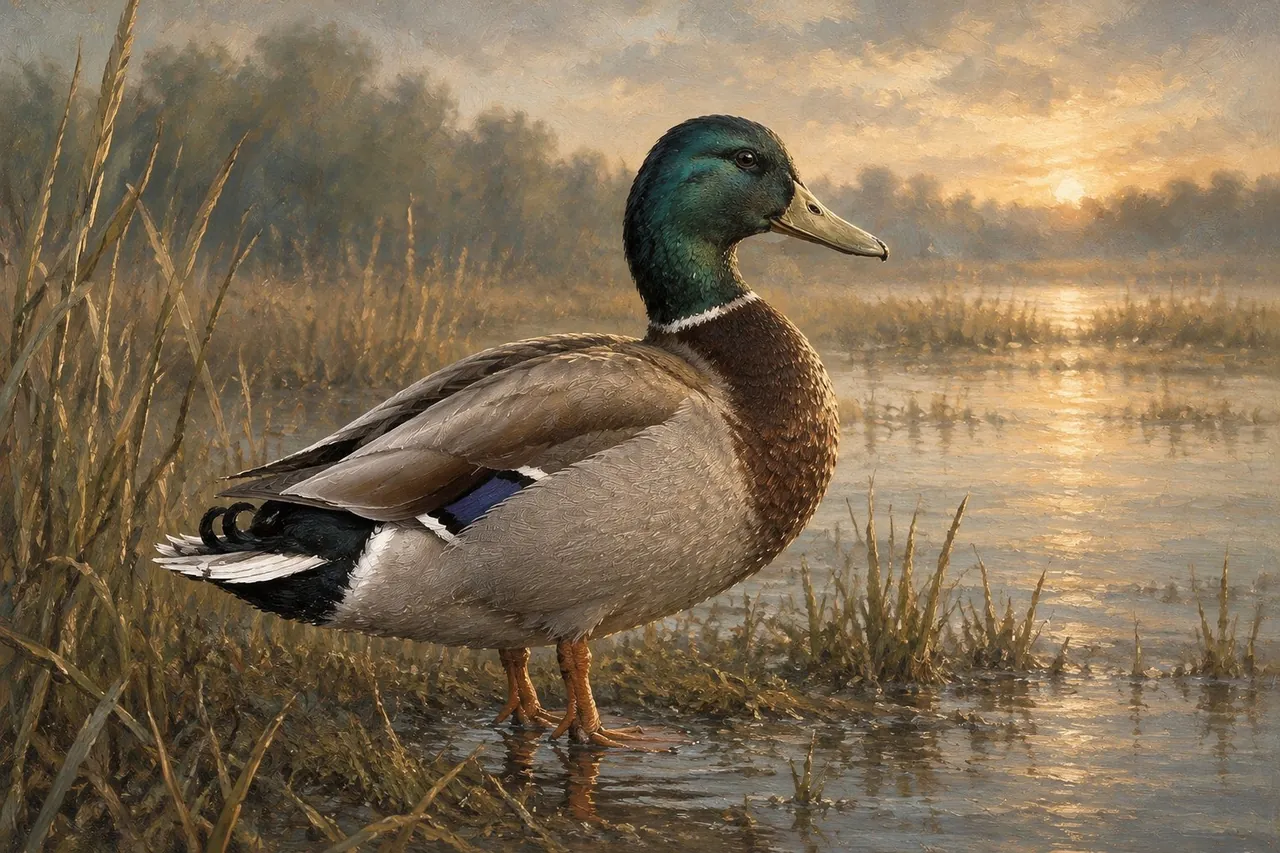
The body:
- Scapulars - long shoulder feathers covering the wing base.
- Primaries - long flight feathers at the wing tip.
- Secondaries - inner wing feathers, often forming the speculum.
- Tail coverts - feathers covering the tail base, in males often curled in mallards.
The feet:
- Webbed between three forward toes - the engine of swimming.
- Set far back on the body - efficient for swimming, awkward for walking.
- Scaly tarsus - bare skin; loses heat fast, hence one-leg standing in cold.
The oil gland:
- Uropygial gland at the tail base - secretes oil the duck spreads over feathers during preening for waterproofing.
The bill's filter-feeding mechanism
The lamellae work like a baleen filter:
- Duck dips bill underwater or in mud.
- Tongue creates suction; water flows in.
- Water exits sideways through lamellae; food particles caught inside.
- Tongue moves the catch back to throat.
This is how a duck can extract tiny food from water and mud without seeing each item. Northern Shovelers - the spatulate-billed champion of filter feeding - have particularly fine lamellae.
Digestive system
A duck’s digestive tract is adapted to a plant-heavy diet:
- Crop - storage area at the base of the neck for swallowed food.
- Proventriculus - the chemical stomach; secretes acid.
- Gizzard - muscular grinding stomach; uses swallowed grit to crush hard food.
- Long intestine - extracts nutrients from cellulose-rich plant matter.
- Caeca - blind pouches at the gut’s end that ferment plant matter.
A duck eats grit deliberately (small stones from gravel) to stock the gizzard. Without grit, hard food can’t be broken down efficiently.

Feather structure
A duck’s feather coat has two layers:
- Outer contour feathers - oily, water-shedding.
- Inner down - dense, insulating, traps warm air against skin.
The outer feathers are kept oily by daily preening with the uropygial gland oil. A duck that can’t preen (oil gland damaged, or feathers contaminated) loses waterproofing fast.

Why ducks moult
Ducks shed and regrow all flight feathers at once during summer - the “eclipse moult”. This is unusual; most birds moult feathers gradually so flight is maintained.
The eclipse moult:
- Renders the duck flightless for 3-4 weeks.
- Coincides with peak plant food availability (less need to migrate or hunt).
- Males often lose their bright breeding plumage temporarily, looking female-like (“eclipse plumage”).
The vulnerability is offset by the timing - moulting flocks gather on protected water where flightlessness is least dangerous.
Sibley Field Guide Birds of Eastern North America
The illustrated reference for duck anatomy.
The Sibley plates show external anatomy in detail, with labels for major feather groups, bill structures, and seasonal plumage variation. Useful for matching what you see in the field to the proper name.
- Detailed anatomical labels on every plate
- Seasonal and juvenile plumage variation shown
- All North American duck species
 Sibley · 2nd Ed.

As an Amazon Associate we earn from qualifying purchases.
The bottom line
Every visible duck feature is an adaptation to aquatic life: the bill for filter-feeding, the feet for paddling, the feathers for waterproofing, the gut for plant matter. Learning the anatomy makes field ID dramatically easier.
For more, see duck feet anatomy and beaks vs bills.