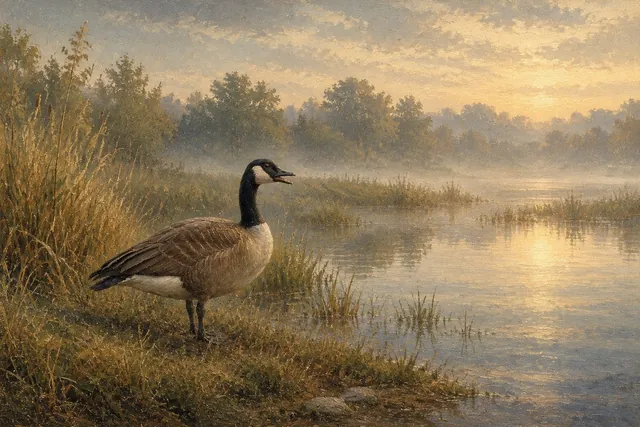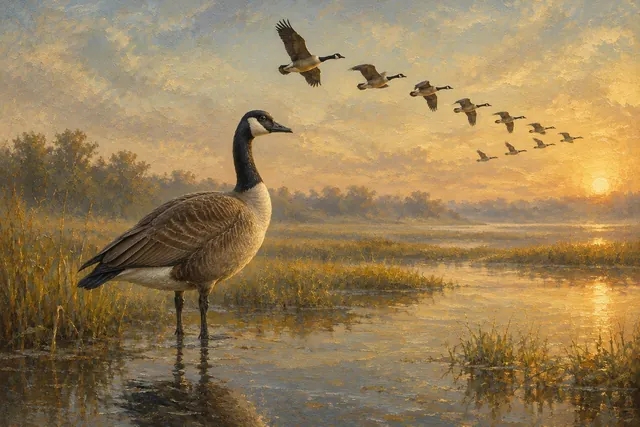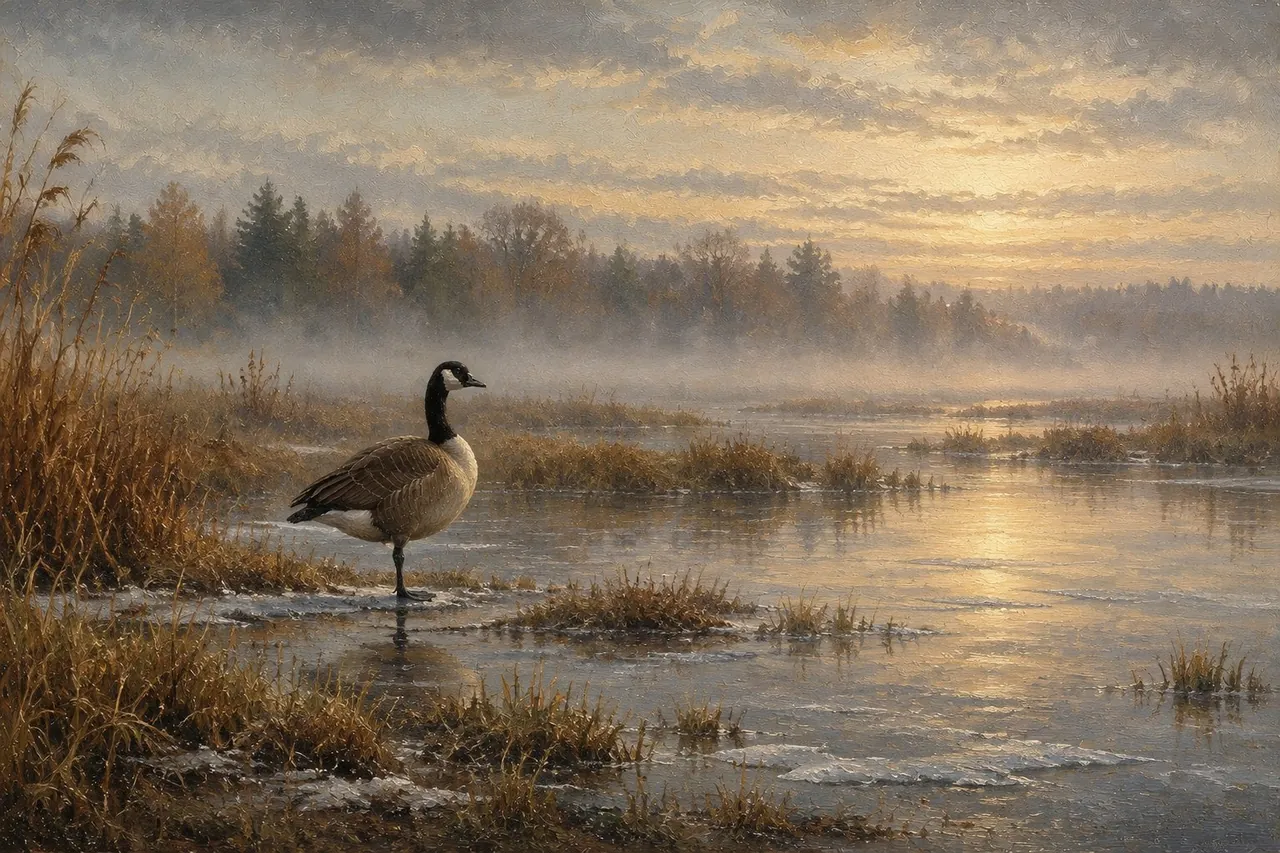
Frozen-pond notes, January.
Geese stand on one leg mostly to conserve body heat. Bird legs have no feathers below the joint and so are major heat-loss surfaces; tucking one up against the body cuts heat loss roughly in half. The behaviour is most common in cold weather and on cold surfaces. A secondary reason is muscle rest - one leg holds weight while the other rests, alternating. The same behaviour appears in ducks, flamingos, herons, and most long-legged birds.
The heat-loss problem
A goose standing on a frozen pond loses heat fast through its legs:
- Bird legs have no feathers below the upper thigh; they’re bare skin and scaly tarsi.
- Cold ground or ice conducts heat away directly.
- Each leg in contact with cold surface is a heat-loss conduit.
By tucking one leg up into the belly feathers, the goose:
- Eliminates one of the two heat-loss surfaces immediately.
- Lets that leg’s blood vessels warm up against the body core.
- Reduces total heat loss through extremities by roughly 50%.
This is why one-legged standing is dramatically more common in winter, on ice, or in wind.
The vascular adaptation
Birds also have a counter-current heat exchange system in their legs - warm arterial blood flowing down meets cold venous blood flowing back, transferring heat sideways so the core stays warm even when feet are at near-freezing temperatures.
This works passively, but combining counter-current exchange WITH one-legged tucking minimises heat loss even more. A goose on ice with one leg tucked is the most heat-efficient configuration available.
Why one-legged sleeping
Geese (and many other birds) also sleep one-legged, often while floating on water. The mechanism is similar: heat conservation by reducing limb exposure. The tendon-locking anatomy of a bird’s leg means the foot grips automatically without conscious muscle effort, so a one-legged stance is restful even on awkward surfaces like branches or floating reeds.
Muscle rest theory
A secondary explanation is muscle fatigue. The leg supporting the weight tires; switching to the other leg gives the first one a rest. Geese DO alternate legs during prolonged standing, which supports this idea.
Most likely both reasons are operating: thermoregulation in cold conditions, muscle alternation in any conditions.
Other birds that do it
Single-leg standing is widespread in birds. Common practitioners:
- Geese, ducks, swans - waterfowl in general.
- Flamingos - the iconic example.
- Herons, egrets, storks - long-legged waders, often while waiting to ambush prey.
- Gulls, terns - on cold beaches.
- Cranes - especially Sandhill Cranes on cold mornings.
- Some songbirds (chickadees, sparrows) - while perched in cold.
The behaviour spans the entire bird class. The same physics applies to all of them.
What if a goose is always on one leg?
A healthy goose alternates. A goose that always favours one leg may have:
- An injury to the other leg.
- A foot problem (bumblefoot, infection).
- An old injury that healed asymmetrically.
If a kept goose seems to never put weight on one leg, examine the foot and tarsus closely. Bumblefoot (a foot infection from prolonged wet conditions) is common and treatable if caught early.
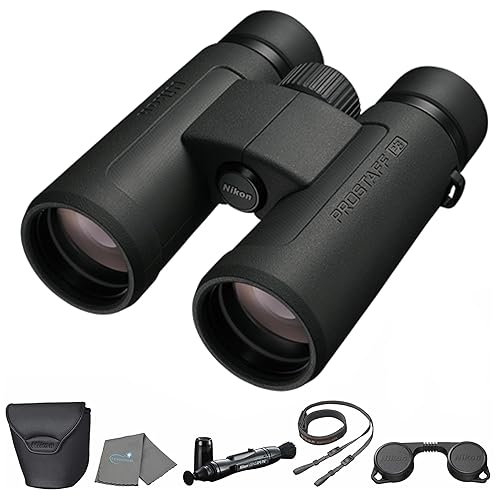
Nikon Prostaff P3 8x42 Binoculars
For watching the leg-swap in action.
A standing goose on a pond bank looks at distance like one bird; the slow alternating-leg cadence only becomes clear with optics. 8x42 brings it into clear view from 50+ metres without disturbing the flock.
- 8x42 - the canonical birding magnification
- Waterproof and fogproof
- Light enough for handheld winter use
 Nikon · Prostaff P3

As an Amazon Associate we earn from qualifying purchases.
The bottom line
Geese stand on one leg primarily to conserve heat. The behaviour is widespread across waterfowl, waders, and many other birds. Most common in winter, on ice, or in wind. A bird that ALWAYS uses the same leg may be injured; alternation is the healthy pattern.