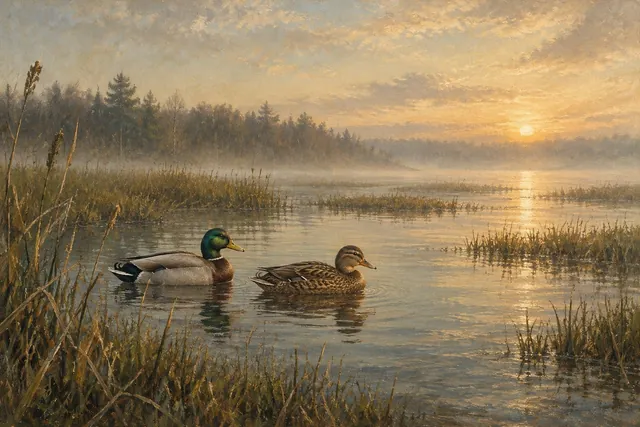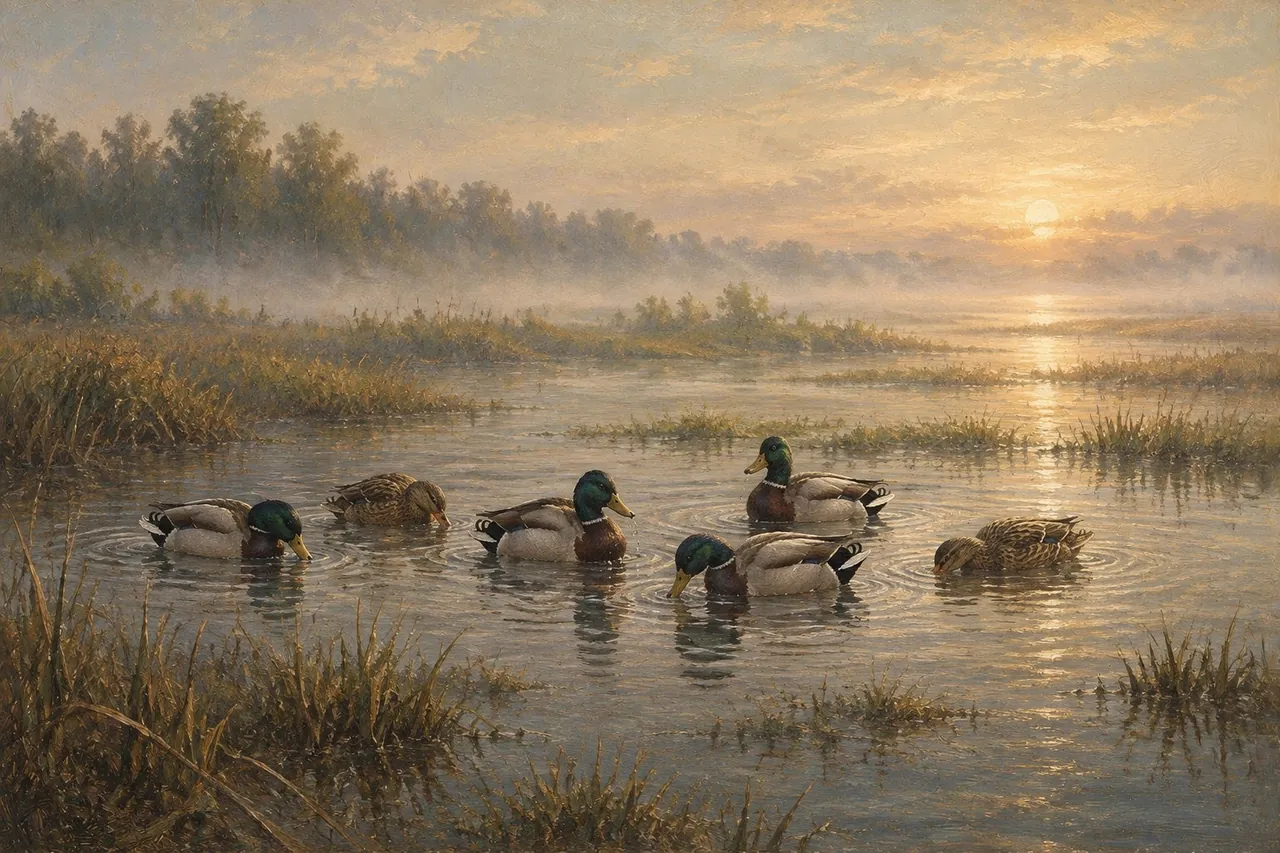
Saw 7 mallards in a row, all bobbing in unison. Spring.
Ducks bob their heads up and down as a deliberate signal, not a random tic. The three most common reasons: excitement at meeting another duck of the same species, a courtship invitation between a paired or pairing male and female, and a “let’s go” rallying signal before the group takes off or moves to new water. Watch the context and you can usually tell which one you’re seeing within a few seconds.
The three signals, and how to tell them apart
- Greeting bob - short, fast, repeated 4-8 times in a row when two birds meet on the water. Both birds usually do it.
- Courtship bob - slower, more deliberate, often with a low whistle or grunt; the female does shorter bobs in response to the male’s display.
- Pre-flight bob - a flock-wide behaviour, often building for 10-30 seconds before everyone lifts off. It synchronises the group.
The pre-flight bob is the easiest to recognise once you’ve seen it. One bird starts, two more join, then the whole flock catches the rhythm and they leave together.
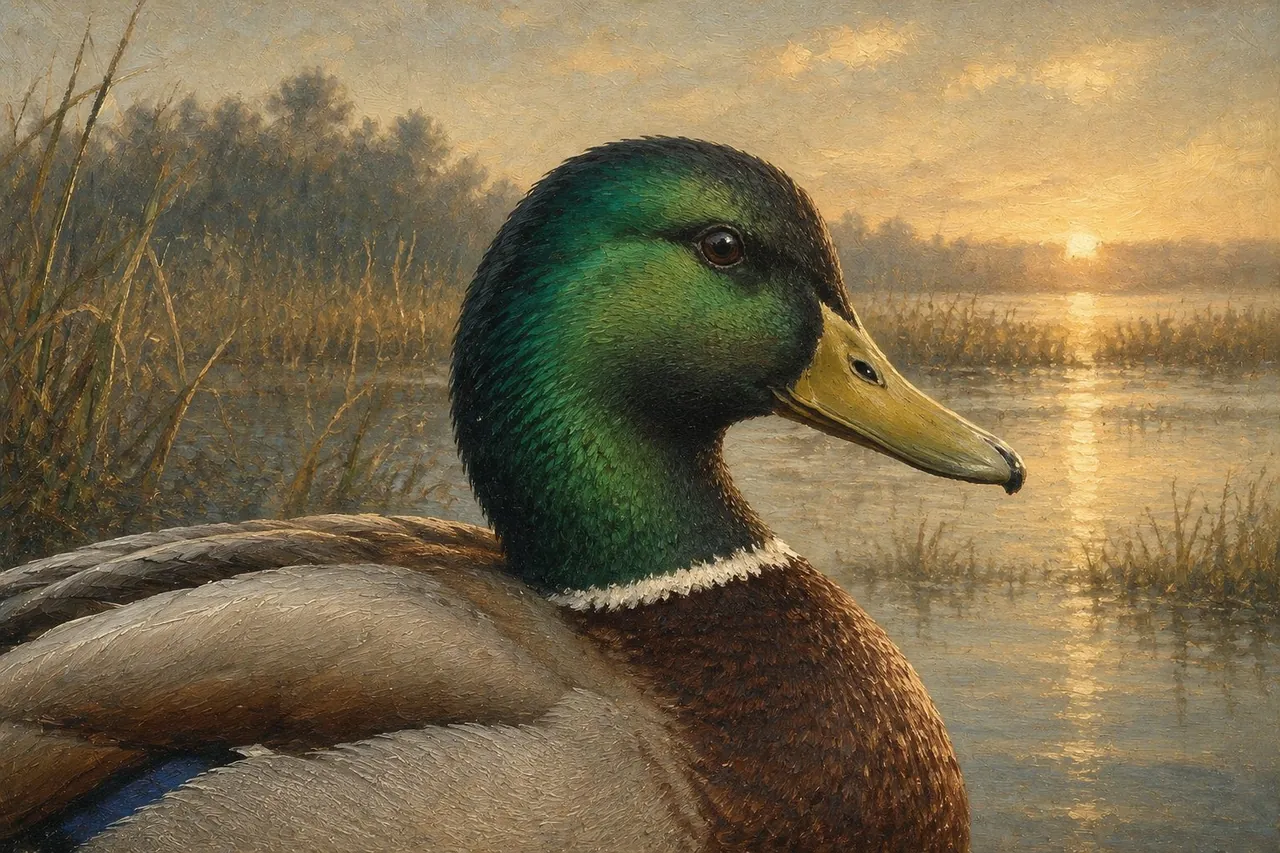
Why bobbing specifically, and not some other signal
Ducks’ eyes are positioned on the sides of their heads, giving them nearly 360-degree vision but poor depth perception straight ahead. A vertical head movement creates parallax: the bird gets a quick 3D read on what’s in front of it. Over time this functional movement became ritualised into a social signal. The same is true in pigeons and chickens.
So a bobbing duck is doing two things at once: physically checking depth, and socially communicating.
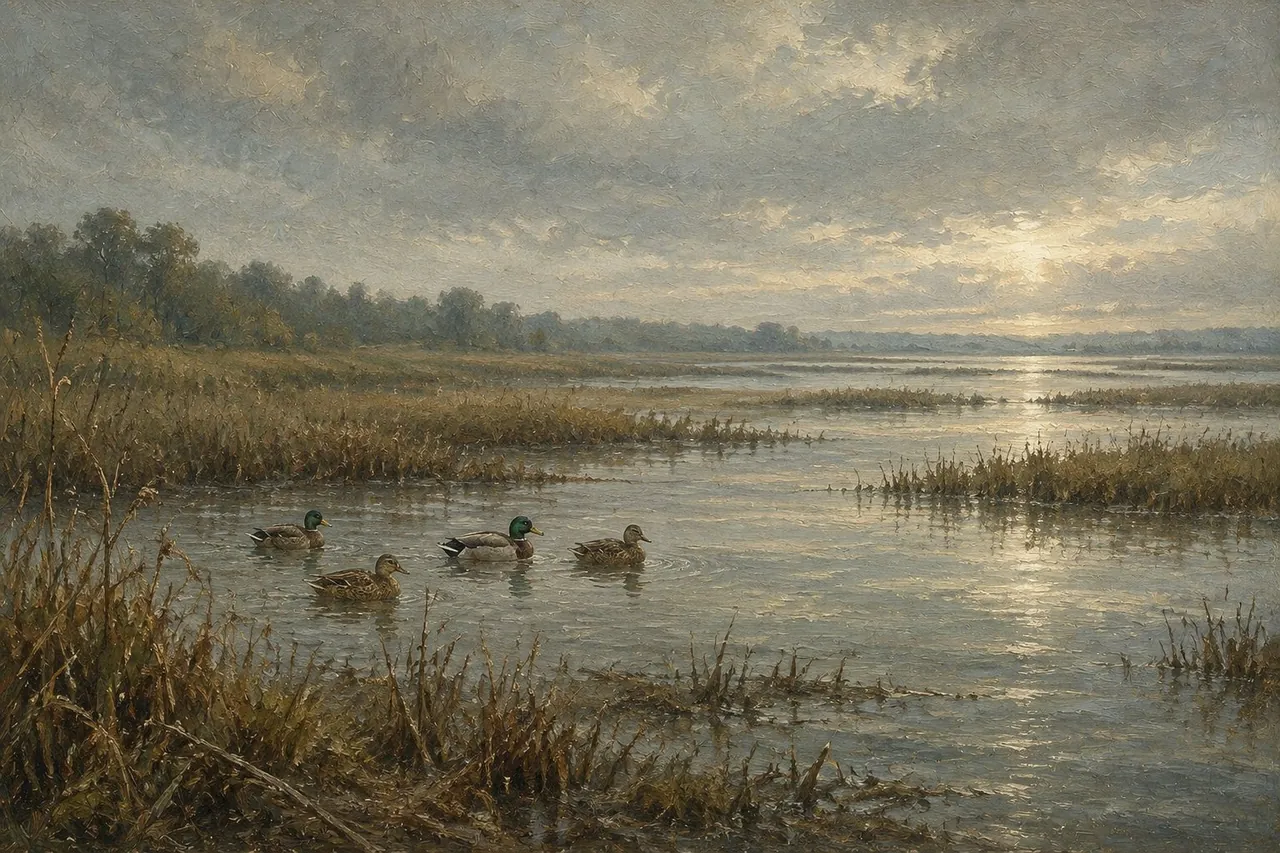
Species recognition
Bobbing patterns vary by species. Mallards bob in 4-count rhythms. Pintails are slower and more elongated. Teal often skip the bob entirely and lead with sideways head-shakes. This is partly why hybrid pairings are rare: the rhythm doesn’t match and the signal gets misread.
If you watch a mixed flock at a pond, you can identify several species without binoculars just by the cadence of their head movements.
When bobbing means something is wrong
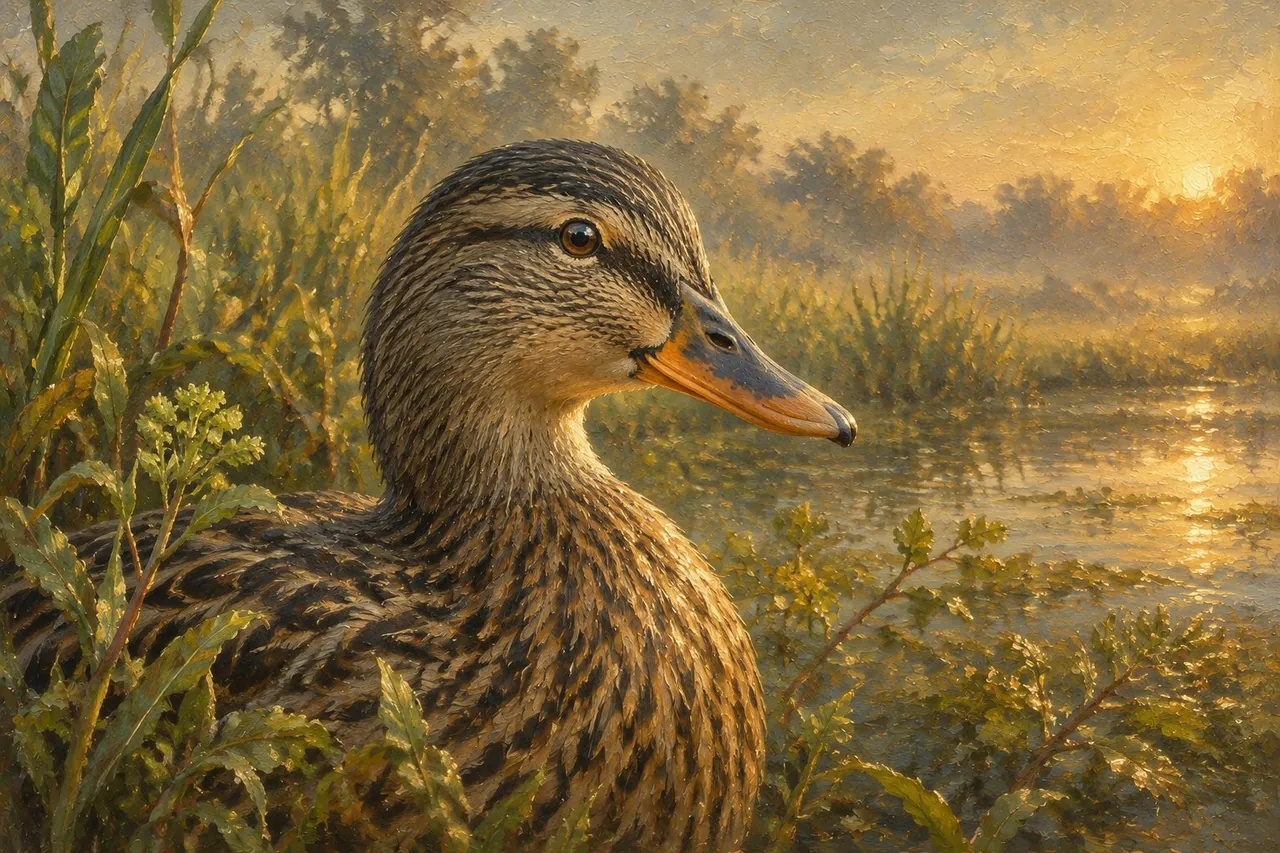
Persistent solo head-bobbing in a captive or rescued duck, especially without context, can indicate a balance disorder, ear infection, or neurological issue. Wild ducks that bob continuously while not interacting with others may be reacting to a perceived predator overhead. Look up before you assume there’s a health problem.
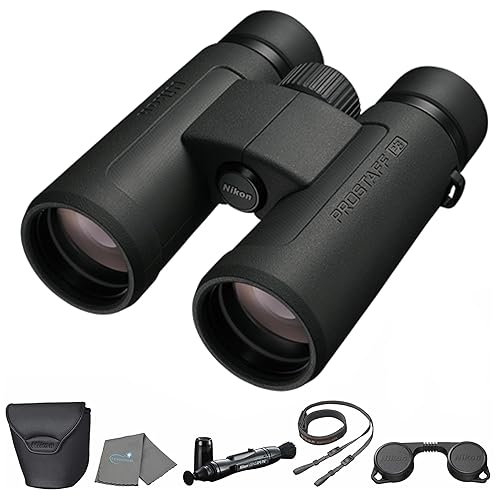
Nikon Prostaff P3 8x42
Read the rhythm from 30 metres.
You can't tell a greeting bob from a courtship bob without good optics. 8x42 is the right balance for pond and wetland watching: enough magnification to see the head movement clearly, wide enough field to keep the whole flock in frame when they start synchronising.
- 8x magnification, 42mm objective
- Multi-coated lenses for low light at dawn and dusk
- Waterproof and fog-proof
 Nikon · Prostaff P3

As an Amazon Associate we earn from qualifying purchases.
The bottom line
Head-bobbing is a deliberate duck signal with three main uses: greeting, courtship, and pre-flight coordination. The rhythm and context tell you which one. Pre-flight bobbing is the most reliable: once a flock starts, expect lift-off within 30 seconds.
For more, see duck quacking and duck anatomy.