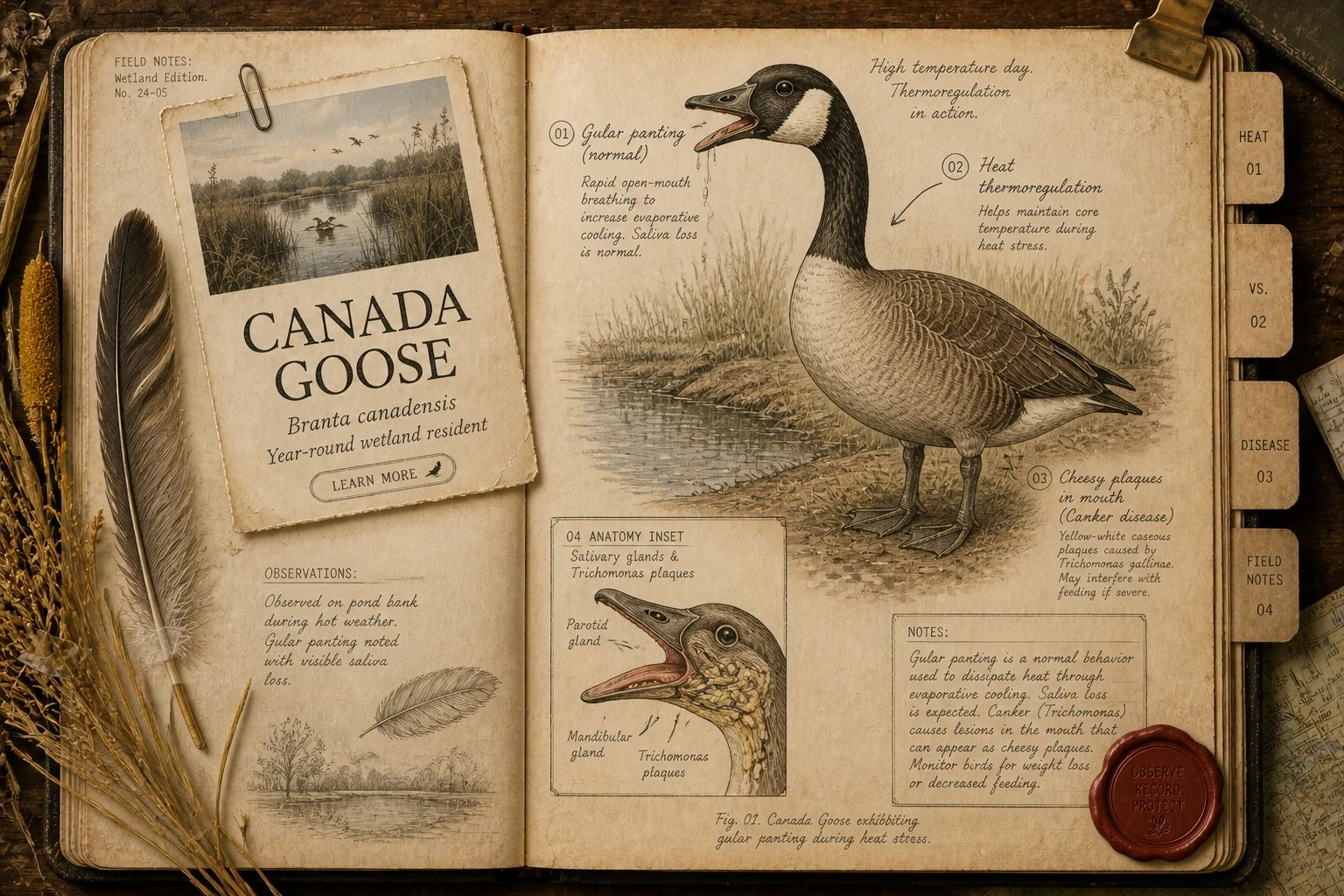
Geese do produce saliva, and they sometimes open the beak and let it visibly run during hot weather - this is gular panting, the avian equivalent of sweating. Persistent thick or yellow drool with swallowing difficulty is something else: usually trichomonosis (canker). Here's how to tell.
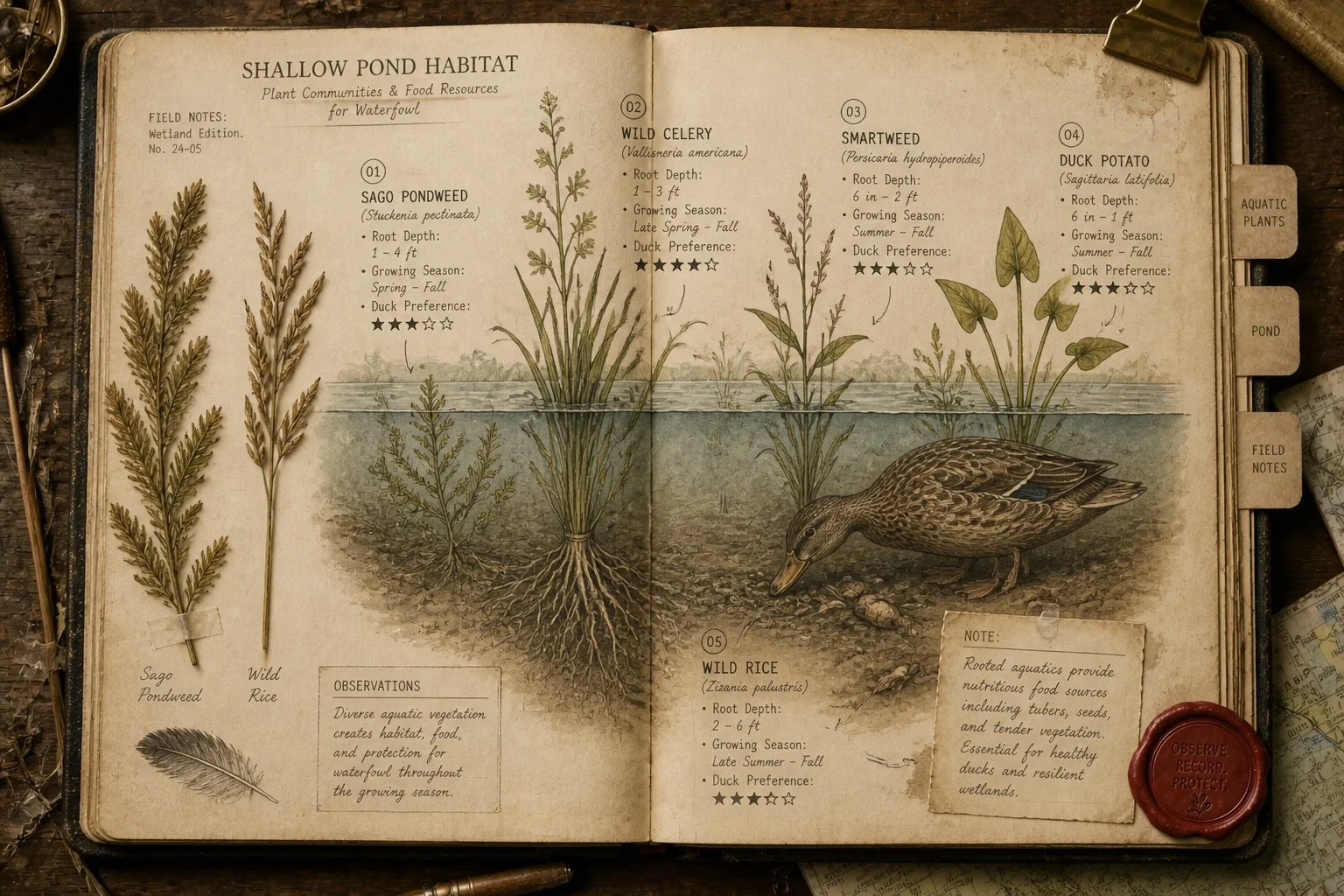
Five plants do most of the work in a duck pond - sago pondweed, wild celery, smartweed, duck potato, and wild rice. Each one feeds different parts of the duck guild. Here's how to establish them, what depth each prefers, and what to skip.
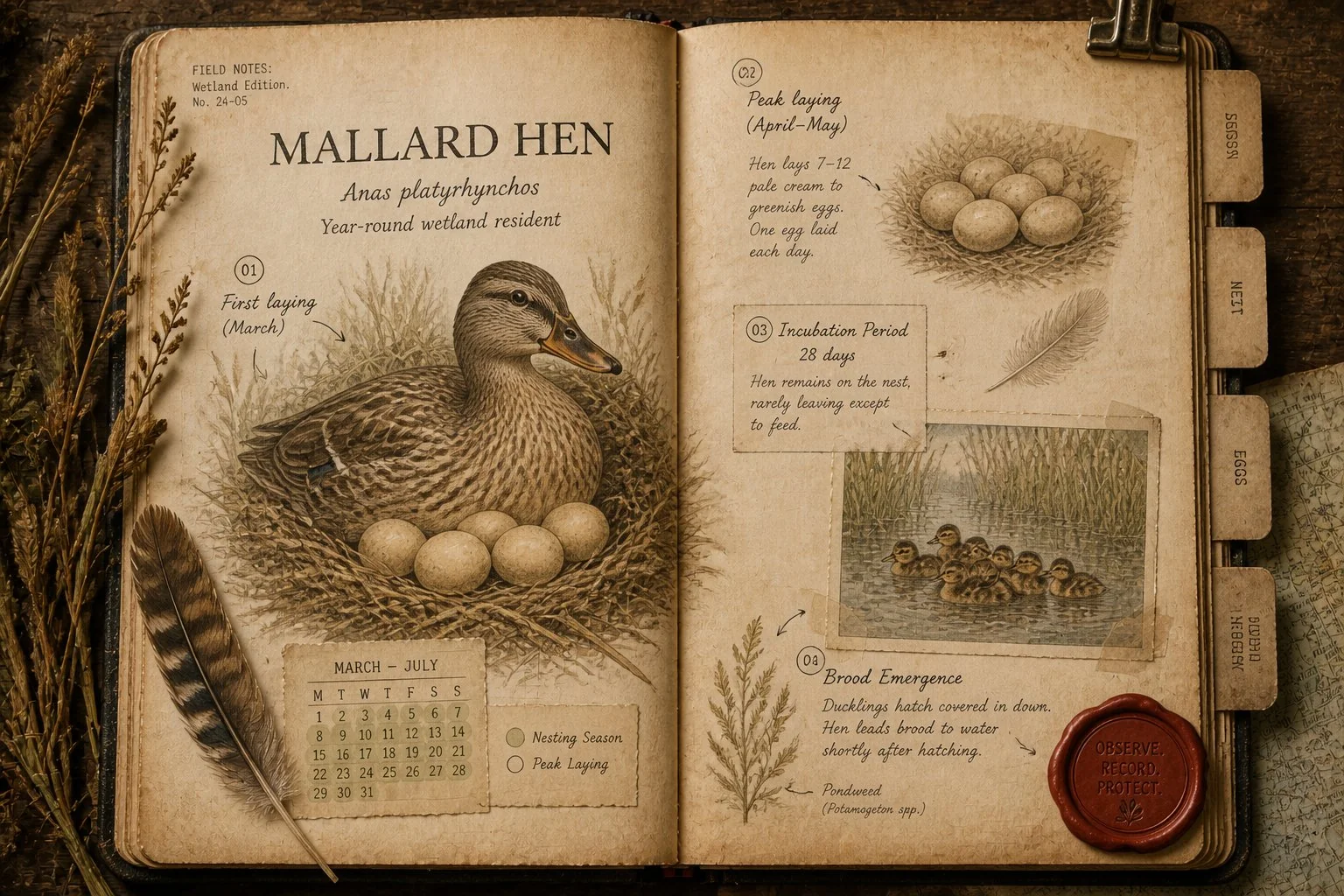
Wild ducks in North America start laying in March, peak in April-May, and finish broods by August. Exact timing varies by species and latitude. Here's the breeding calendar and what to expect on a backyard pond.
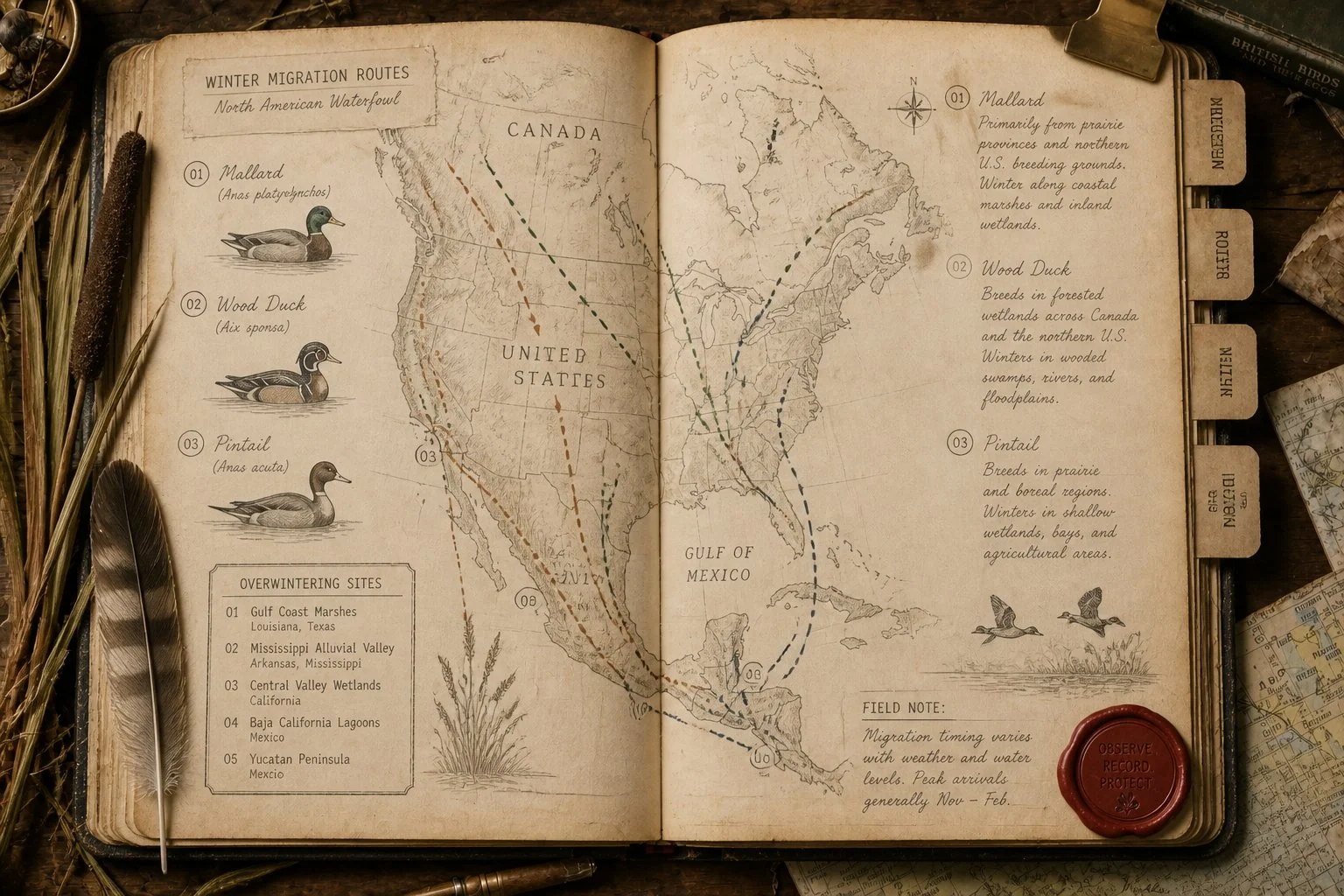
North American ducks migrate along four major flyways - Pacific, Central, Mississippi, and Atlantic. Most northern breeders winter in the southern US (Gulf coast, California Central Valley, Chesapeake) or Mexico. Here's the per-species pattern and the science behind it.
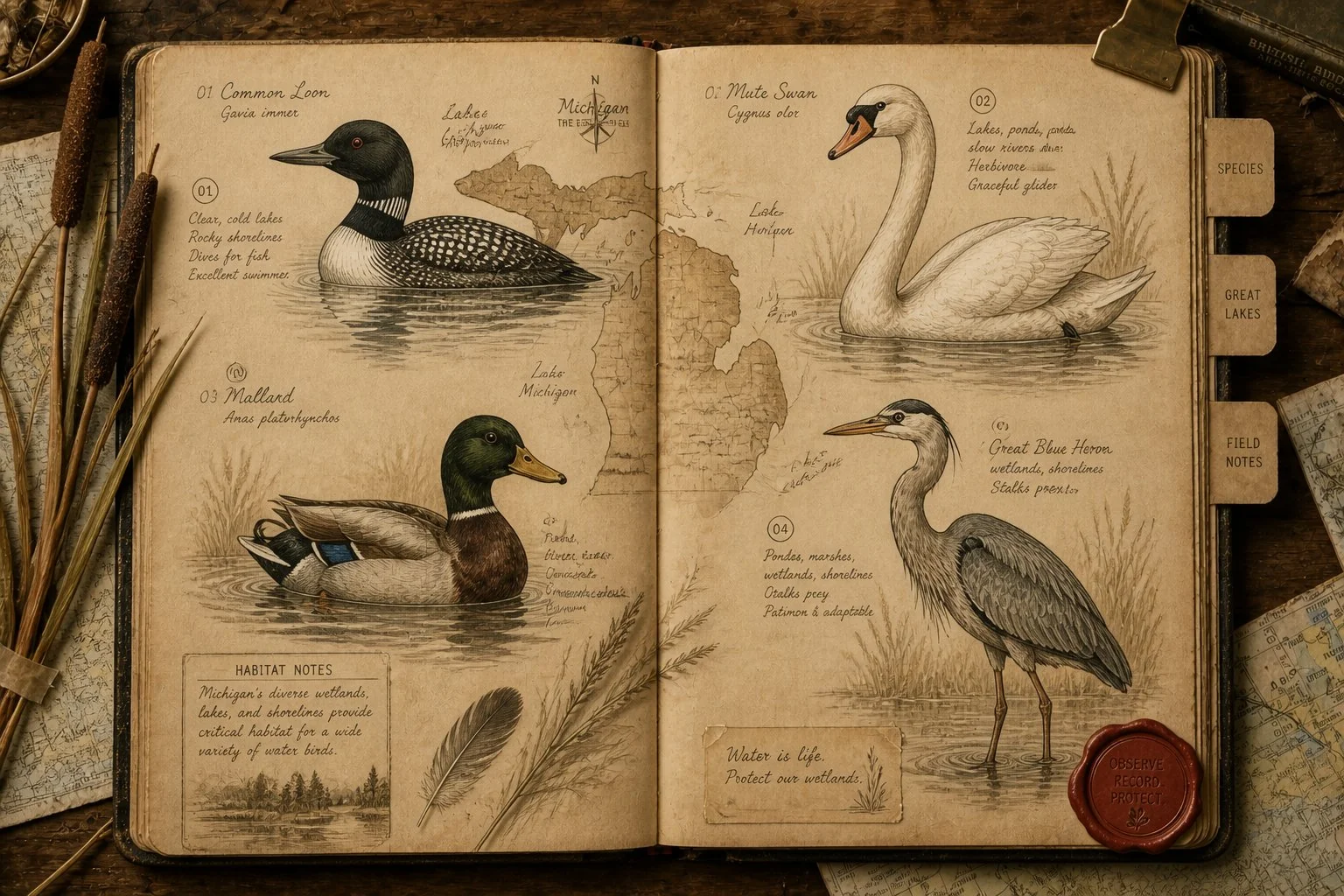
Michigan's 3,000+ miles of Great Lakes shoreline plus inland lakes and marshes host roughly 40 water bird species. Twelve cover most field sightings: Common Loon, Mute Swan, Mallard, Wood Duck, Great Blue Heron, plus seven others. Here's where and when.
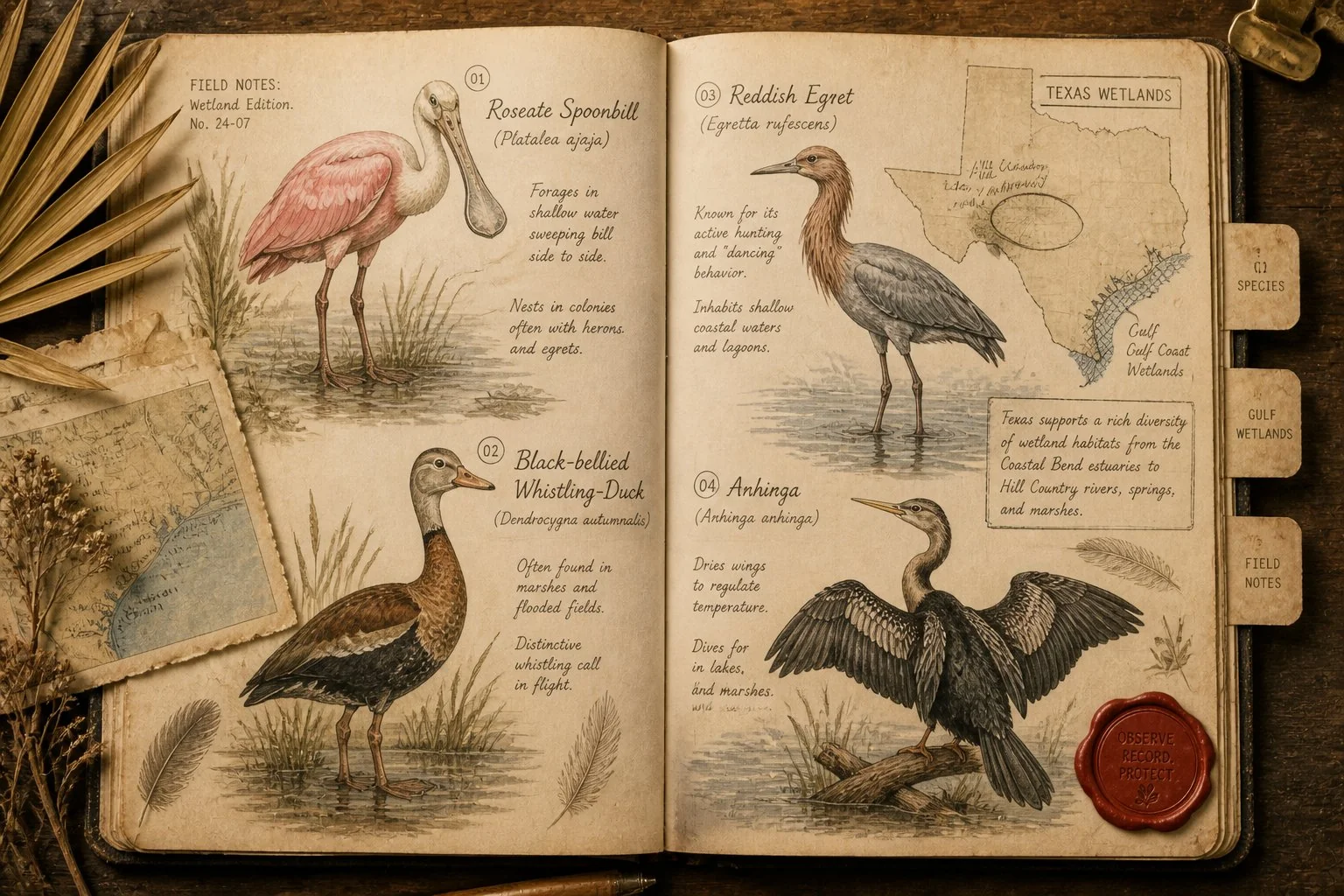
Texas hosts more water bird species than any other US state - over 80 regularly occur. Sixteen cover most field sightings: Roseate Spoonbill, Black-bellied Whistling Duck, Reddish Egret, Great Blue Heron, Anhinga, Mottled Duck, and ten others. Coast, Hill Country wetlands, and Panhandle playas each have their own.
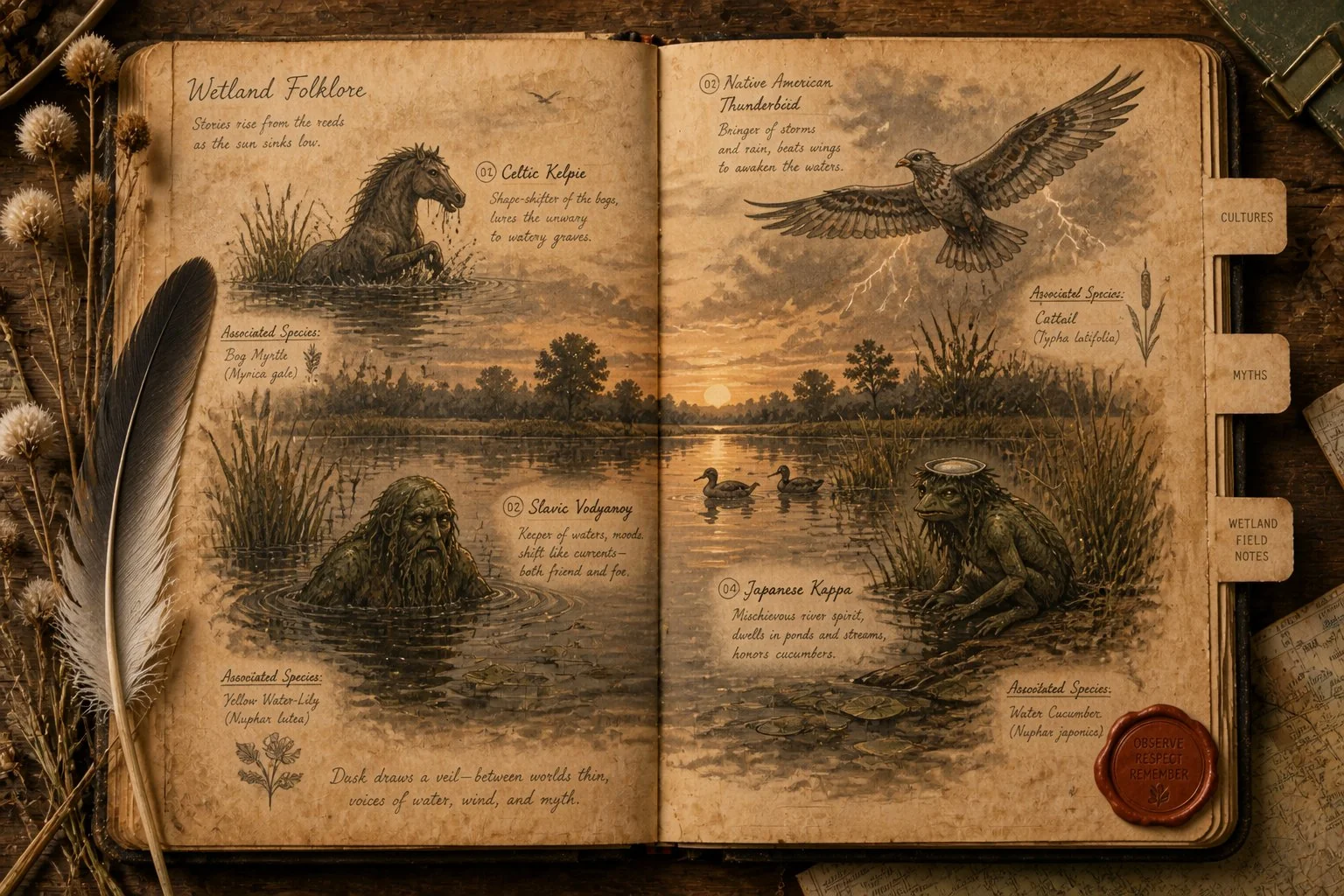
Wetlands hold some of the oldest folklore in the world - Celtic kelpies, Slavic vodyanoy, Native American thunderbirds, Japanese kappa, and dozens more. Almost every culture that lived near marsh and bog produced spirits to explain it. Here's a guided tour.
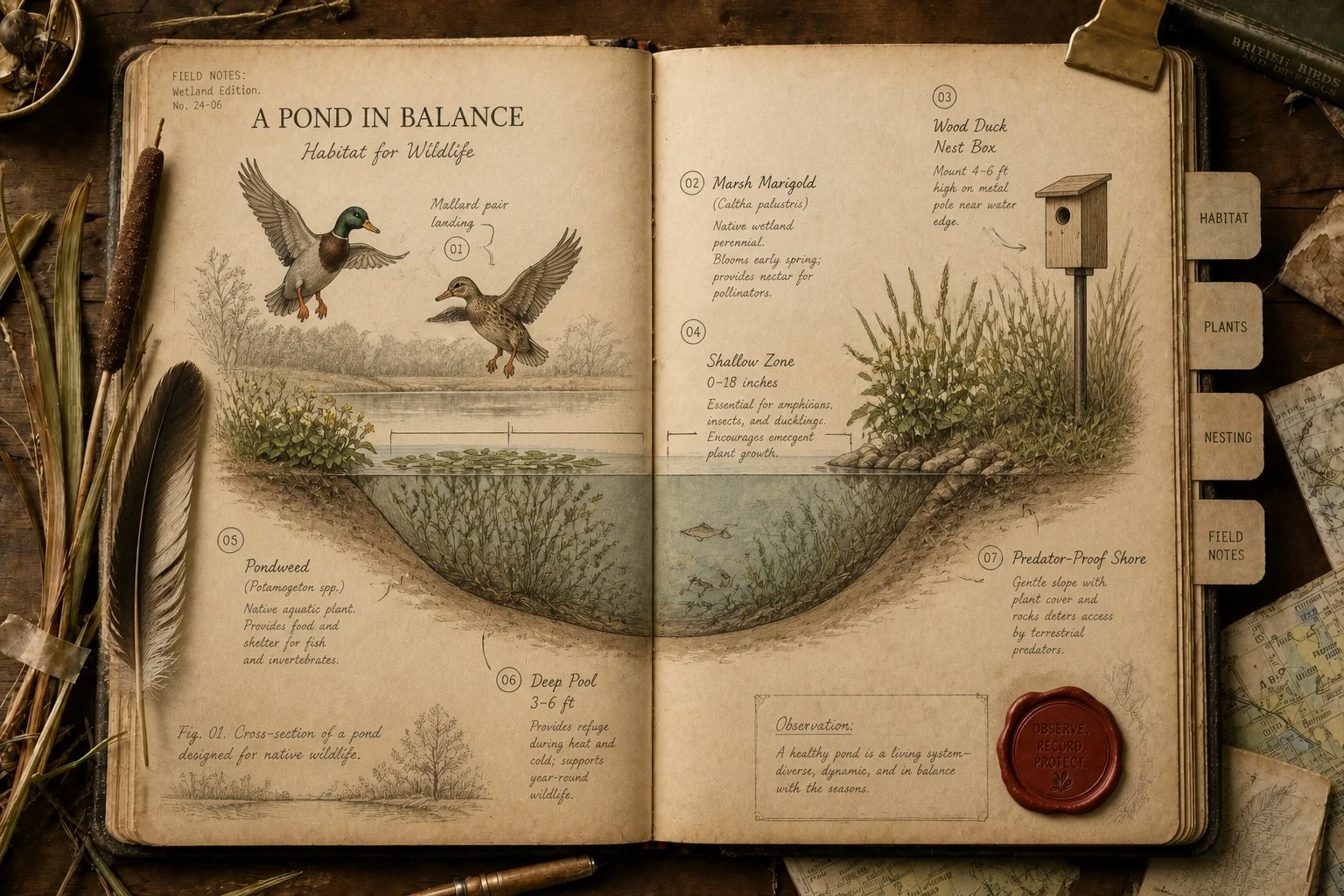
Wild ducks need four things: shallow margins for dabbling, submerged food plants, predator-proof cover, and nest cavities. Get those four into a one-acre pond and you'll have Mallards, Wood Ducks, and Hooded Mergansers within a single season.
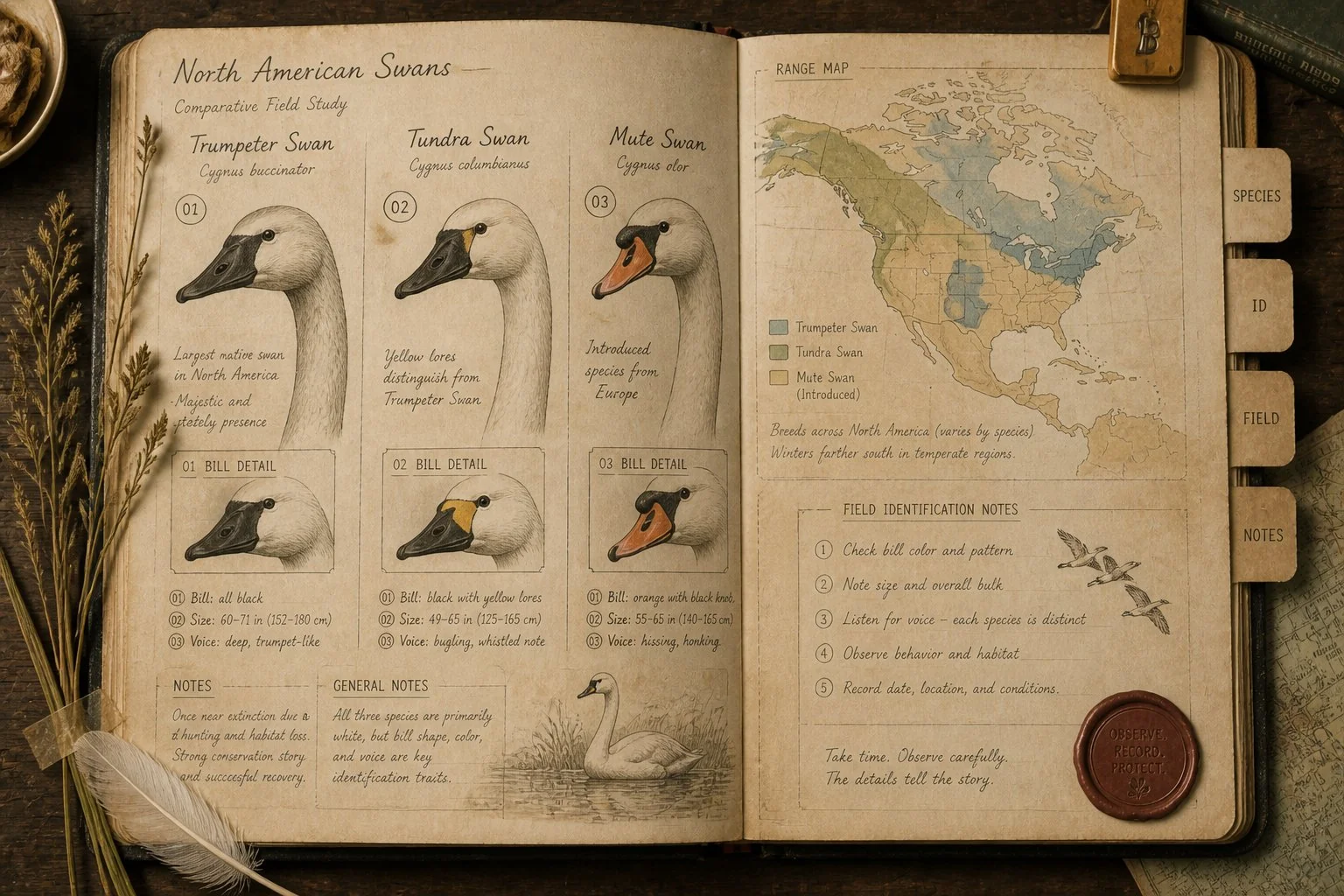
Three swan species occur in North America: the native Trumpeter (largest, with a clarion call), the native Tundra (smaller, more numerous), and the introduced Mute (Eurasian origin, common on parks and waterways). Here's how to tell them apart by bill, voice, and behaviour.
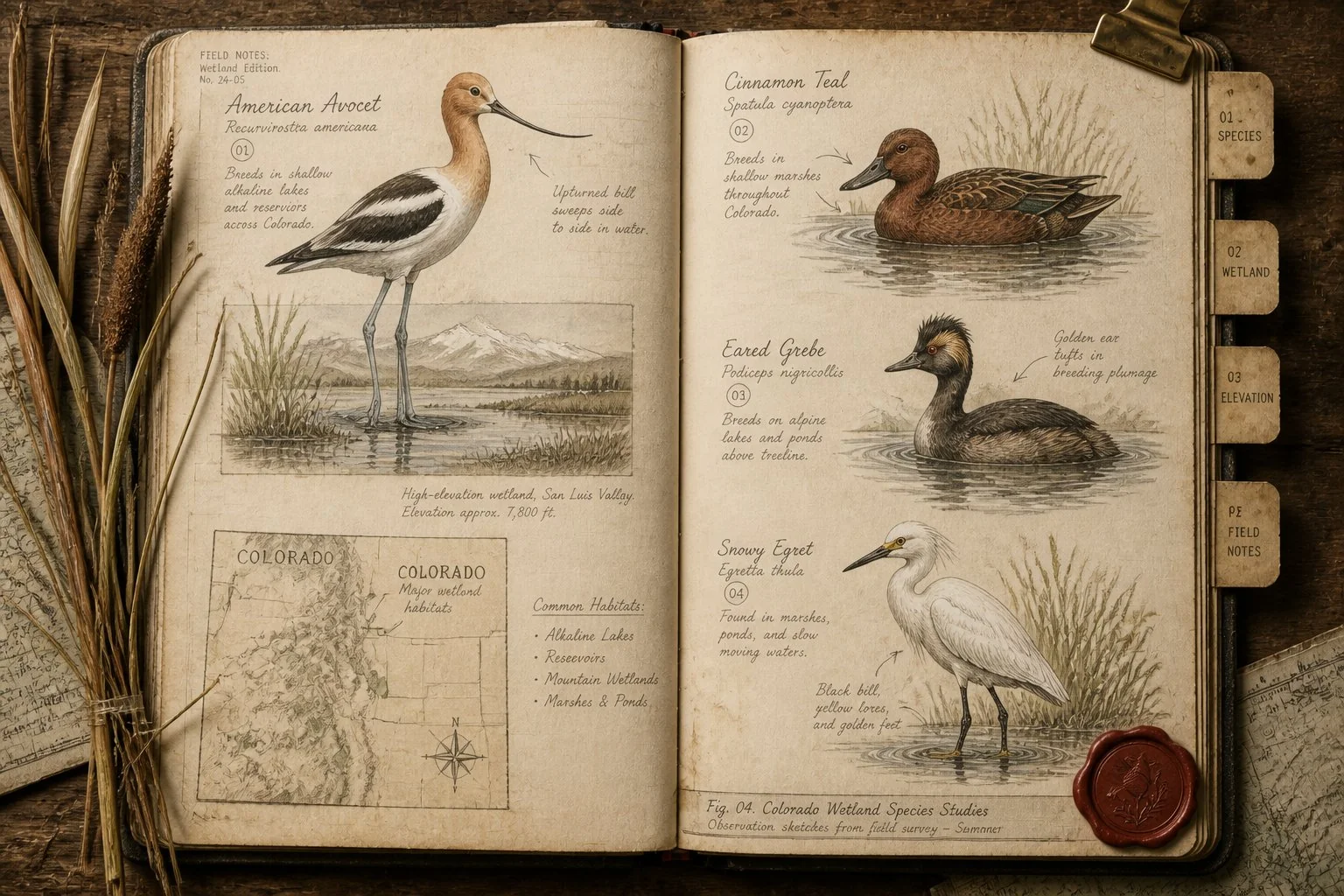
Colorado's high-altitude wetlands, reservoirs, and South Platte/Arkansas river systems host roughly 50 water bird species. Fourteen cover most field sightings: American Avocet, Cinnamon Teal, Eared Grebe, Snowy Egret, Great Blue Heron, Western Grebe, Mallard, American Wigeon, plus six others. Here's where and when.
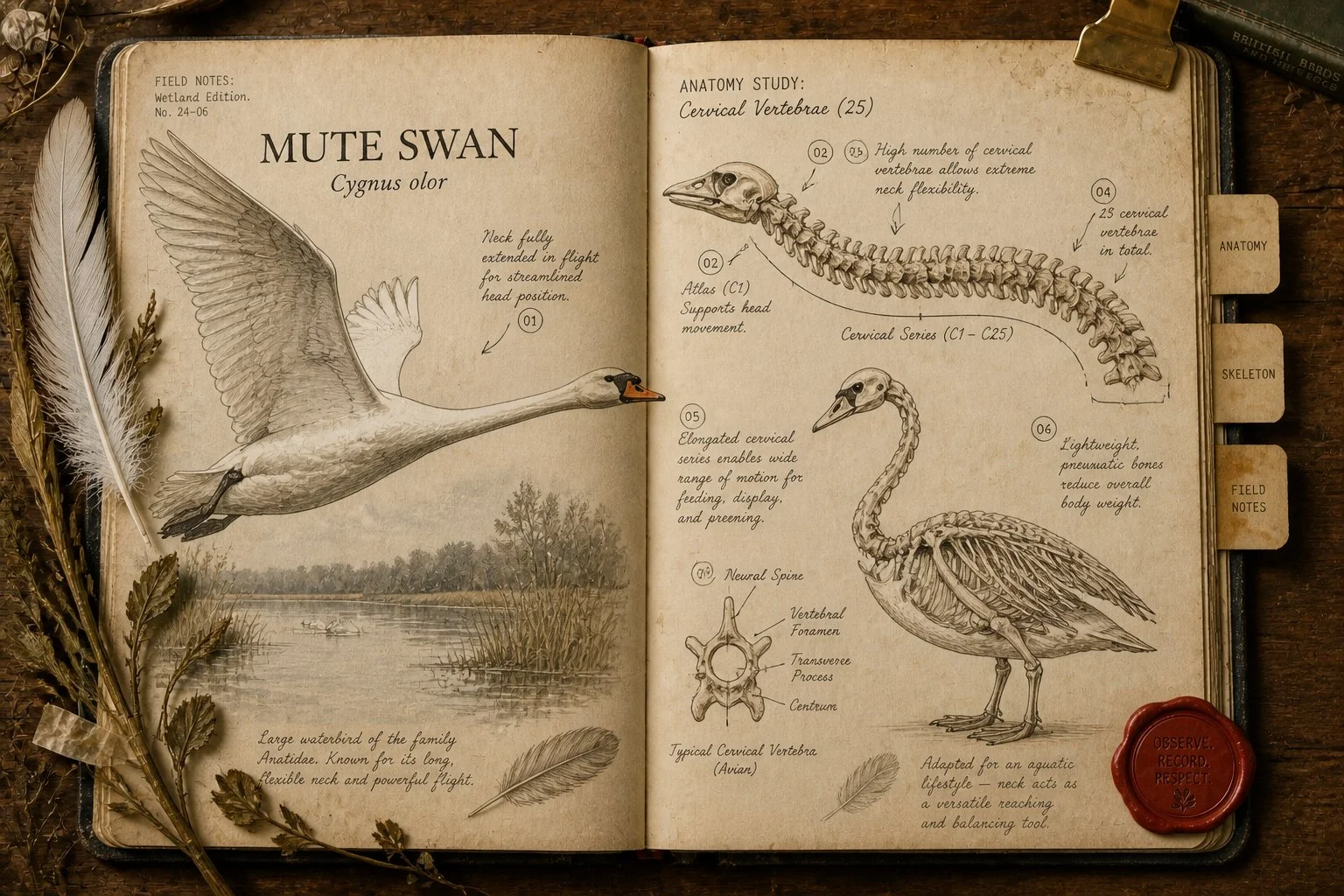
Swans are vertebrates with a full skeletal spine. The famously long neck contains 22-25 cervical vertebrae - far more than a giraffe's 7 - which is what gives it the flexibility to reach pondweed at depth. Here's the anatomy.
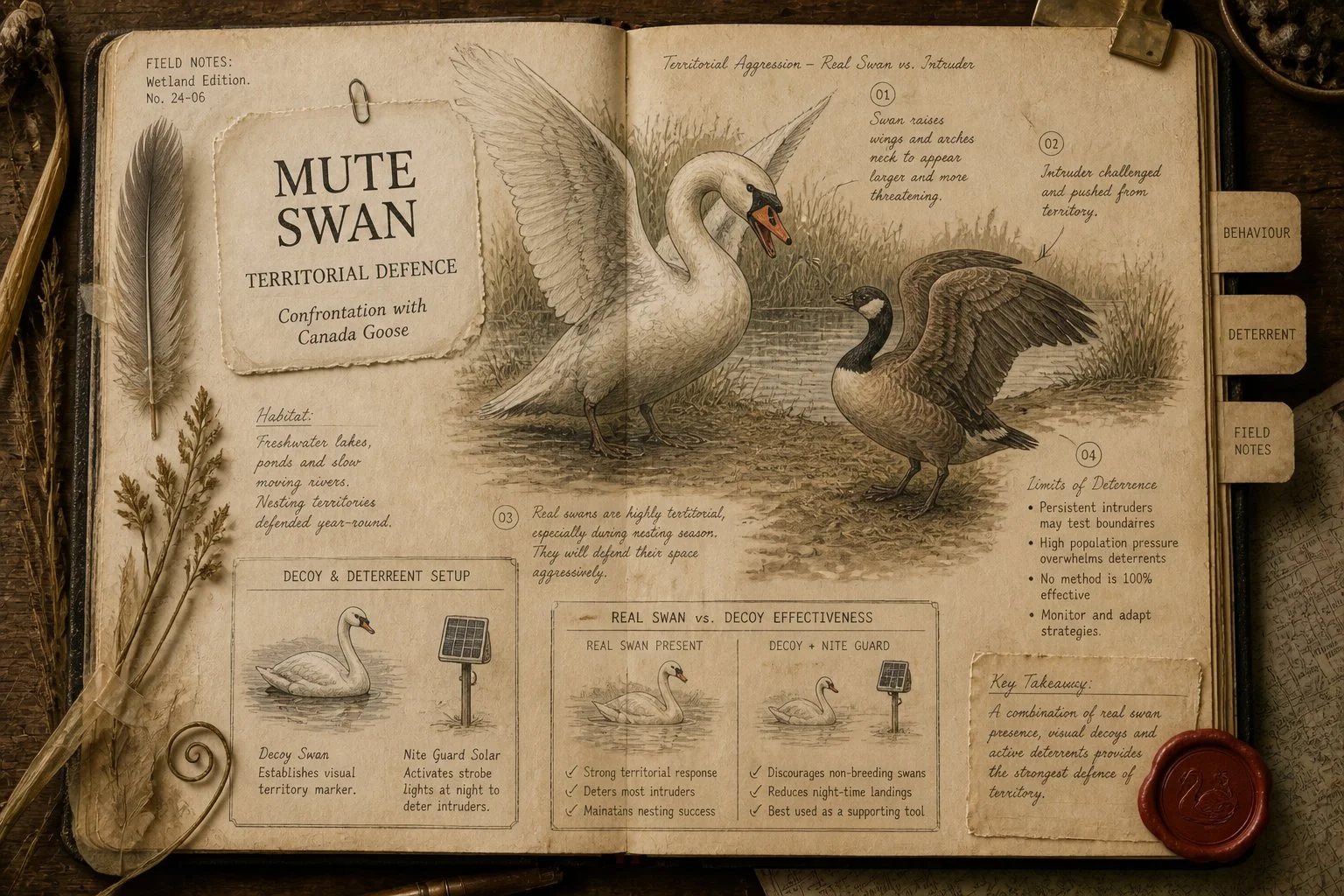
A breeding pair of Mute Swans will aggressively defend their pond against Canada Geese and clear them out within days. Plastic swan decoys mostly don't work - geese learn they're fake within a week. Here's what does work for goose control on a small pond.
 № 216
№ 216